
Los Angeles, USA Fri, Sep 11, 2026 at 1:00 pm PDT
New York, USA Fri, Sep 11, 2026 at 4:00 pm EDT
London, United Kingdom Fri, Sep 11, 2026 at 9:00 pm BST
Across today’s audiovisual practice, artists and technologists are increasingly working in creative environments where human perception, algorithmic systems, and media infrastructures shape one another in real time. From AI-generated imagery and responsive music systems to sensor-driven performance and immersive installations, creation now often unfolds through shared processes rather than isolated acts of authorship. This shift reflects a broader cultural moment in which computational systems act as co-creators, shaping the creative process with patterns, gestures, and variations that invite artists into new ways of sensing, interpreting, and creating, where computational patterning and embodied sensing fold into one another. As these hybrid practices multiply, questions arise about how agency, intuition, embodiment, and aesthetic decision-making evolve when creativity becomes a collaboration between human and machine.
This session brings together practitioners and thinkers from multiple fields to explore these emerging forms of co-creation, the experiences they produce, and the wider cultural and artistic transformations they signal.At a moment when machine learning systems shape everything from cultural production to everyday perception, understanding how these technologies participate in creative processes has become increasingly urgent.
As artists, designers, engineers, and researchers engage tools that can learn from vast datasets, respond to gesture and movement, or generate complex audiovisual material, new questions surface:
- How does creative agency shift when computational systems contribute to shaping form and sensibility?
- What kinds of intuition, improvisation, and embodied awareness emerge in environments where perception is co-constructed by humans and machines?
- How do curators, audiences, and practitioners interpret works that arise through distributed authorship, and what ethical or aesthetic implications accompany these hybrid practices?
Bringing together voices from multiple fields, this session creates a space in which artistic experimentation and critical reflection meet, offering insights into how human and machine imagination evolve together and how these developments are redefining contemporary audiovisual creation.
Link to:
• Connections and Curatorial Prompts for Conversation (data visualization)
• Data visualization inspired by the discussion topics.
Conversing with Matter: Softmachine and a Material Model of the Generative
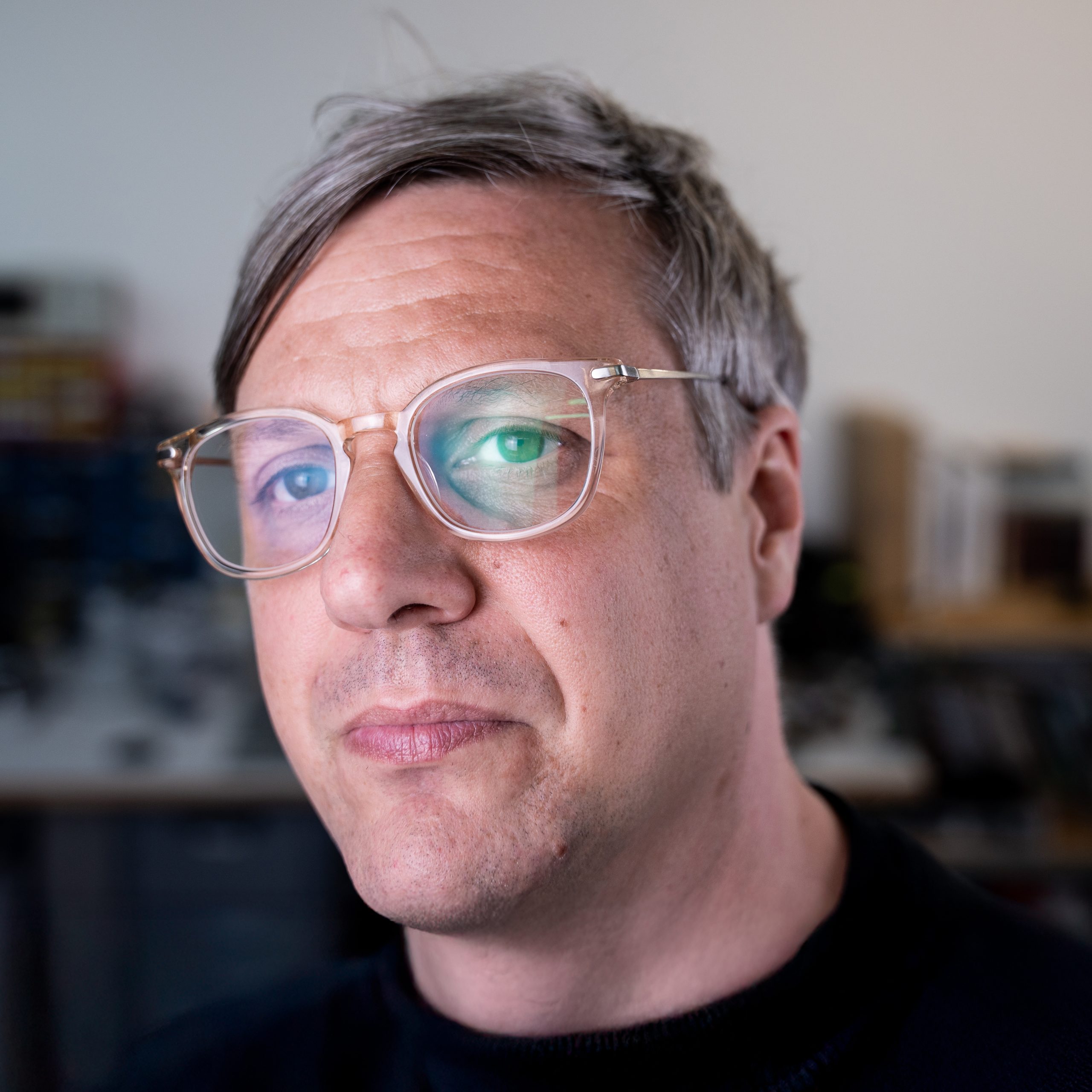
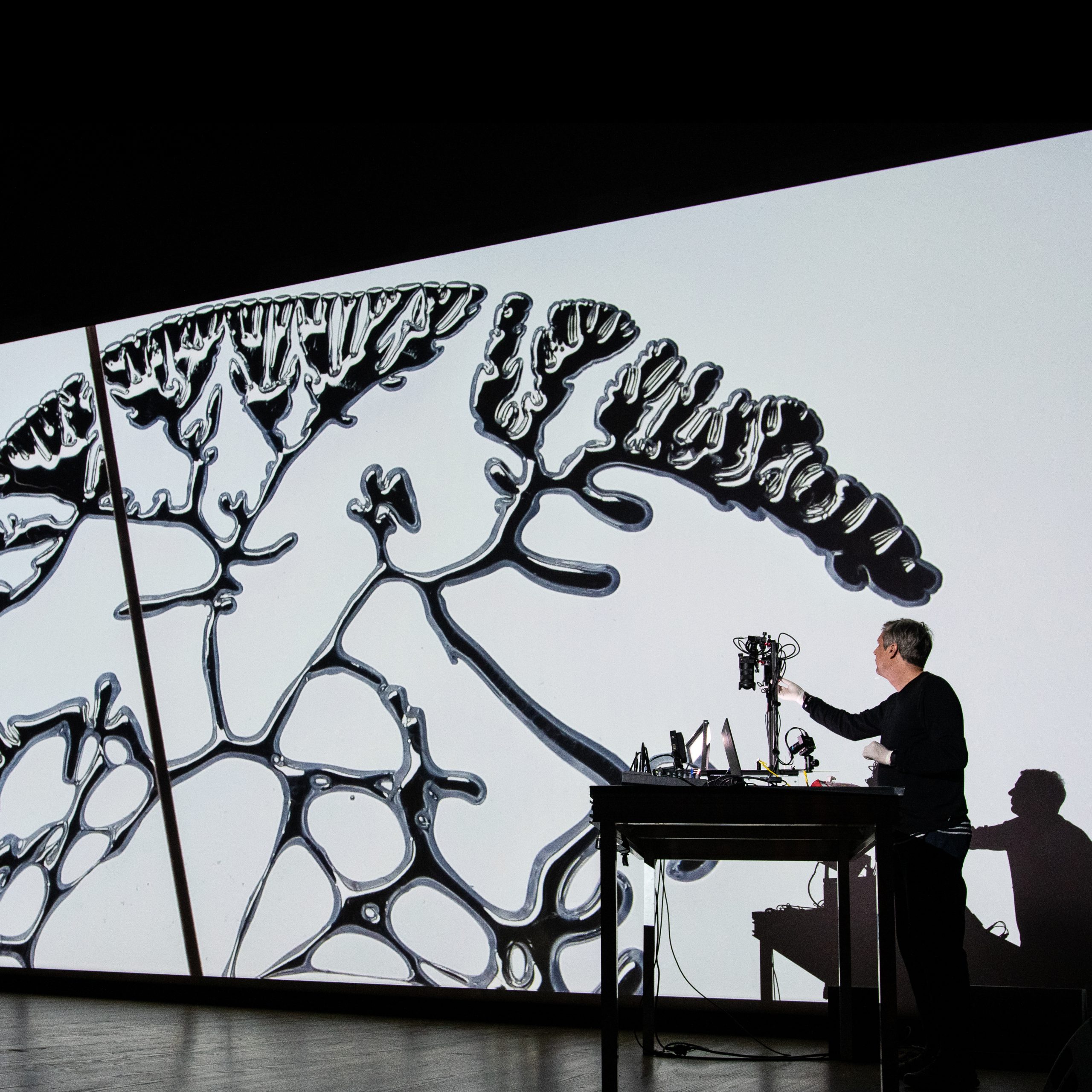
As generative AI reframes audiovisual creation as a collaboration between human and machine, this talk turns to a very different kind of machine partner: A Natural History of Networks / Softmachine—an audiovisual performance driven by a self-organizing electrochemical system—asks what co-creation looks like when the machine is not a trained model but living matter: liquid metal that forms, reorganizes, and resists control in real time. Drawing on Gordon Pask’s electrochemical learning machines, the talk offers an older, material lineage for questions the current moment tends to pose in purely computational terms—about agency, improvisation, and what it means for a machine to appear to think, or to be alive.
Performing Audiovisual Generative ML
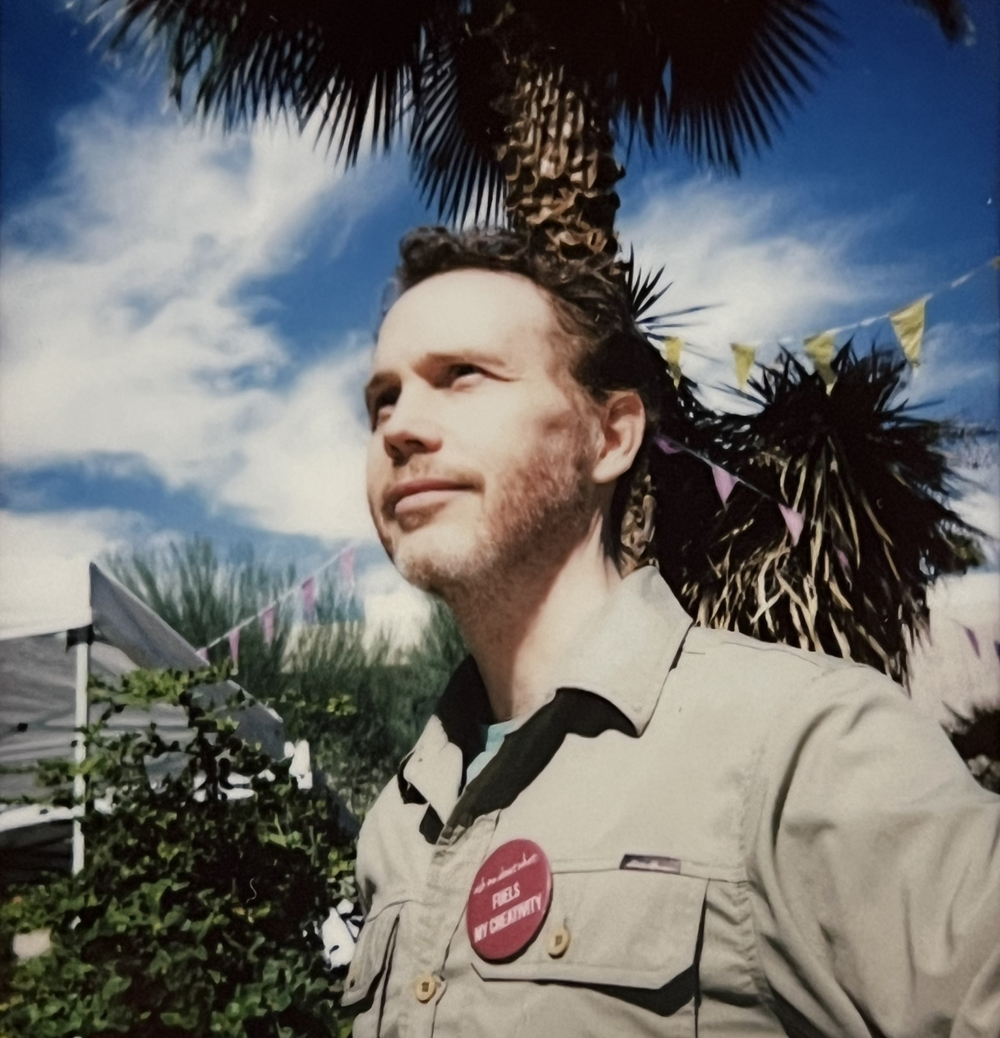
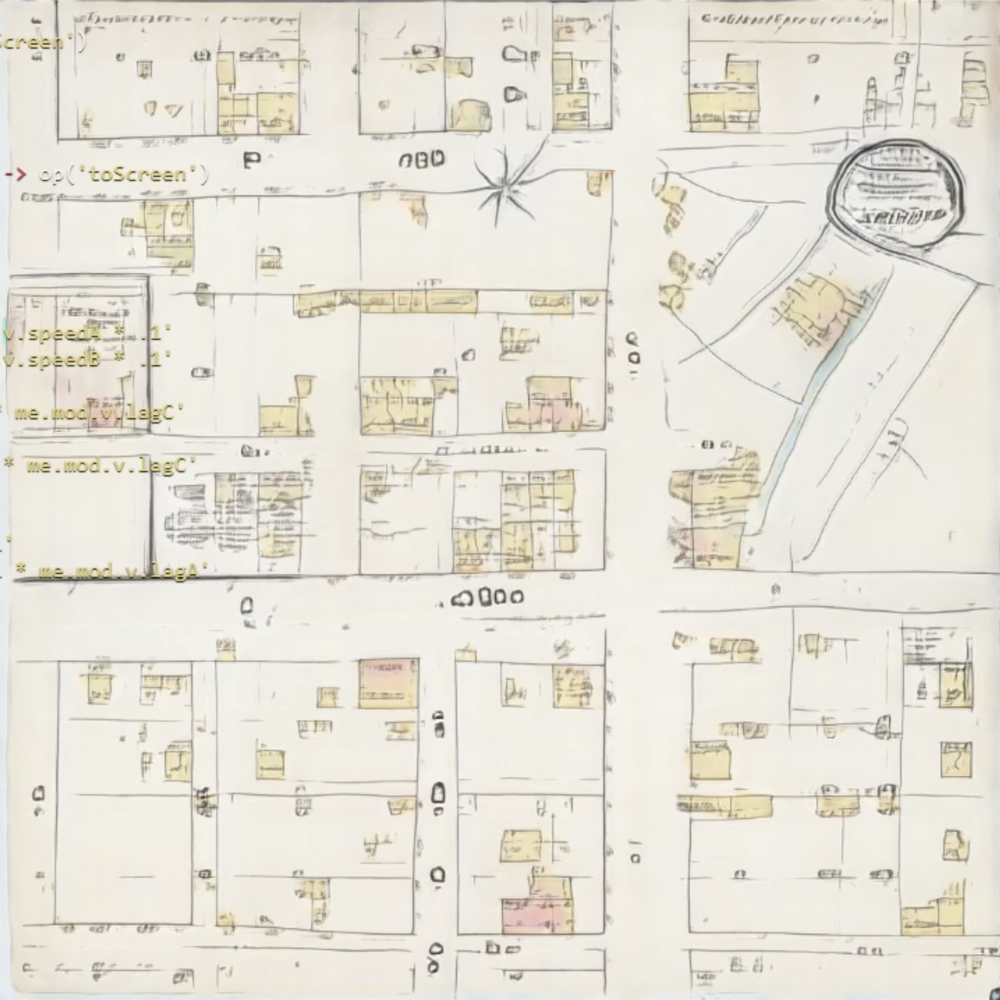
This brief presentation will highlight the use of generative machine learning for audio and visuals in performance settings. Short samples will be accompanied with post-mortem experiences of gathering data sets, training neural nets, automating finished agents, and live-coding top level parameters and layer weights (model bending) during performance.
Polymodalities of Generative AI: TechnoAlchemy across Instruments, Aesthetics, and Criticalities
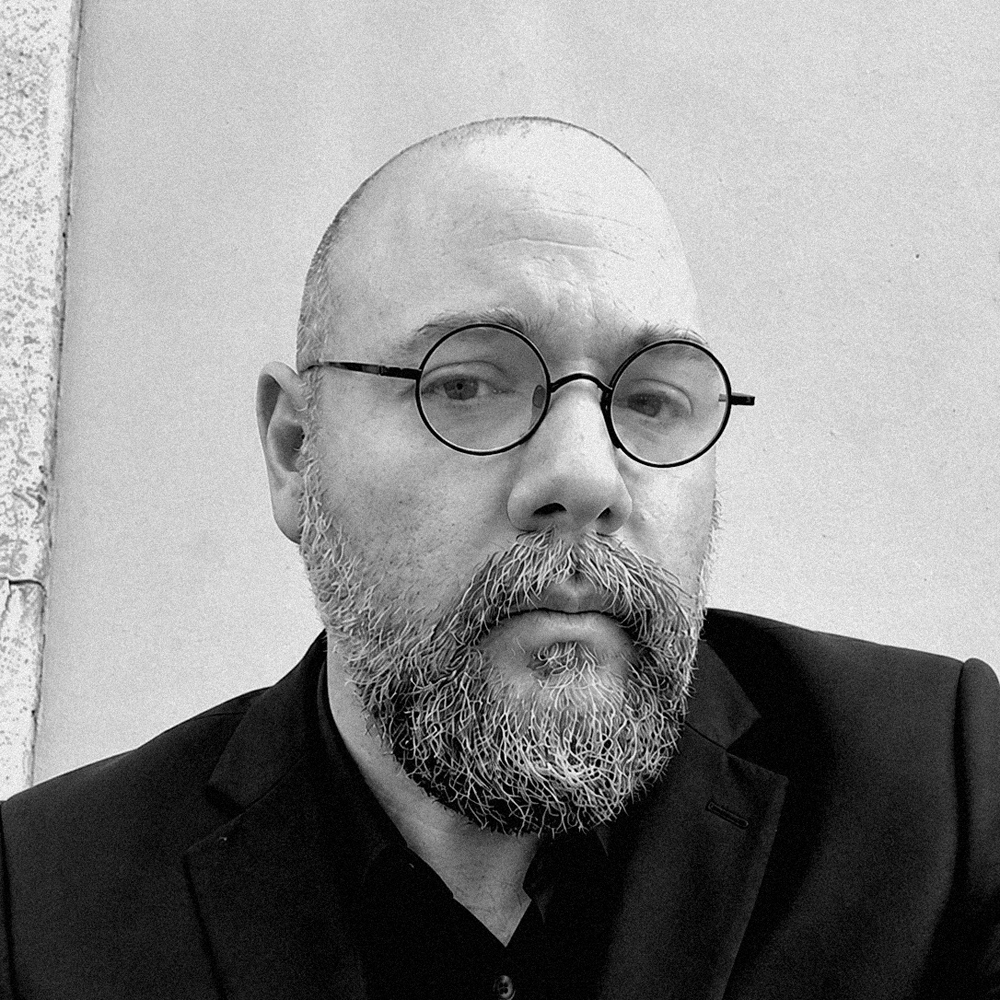
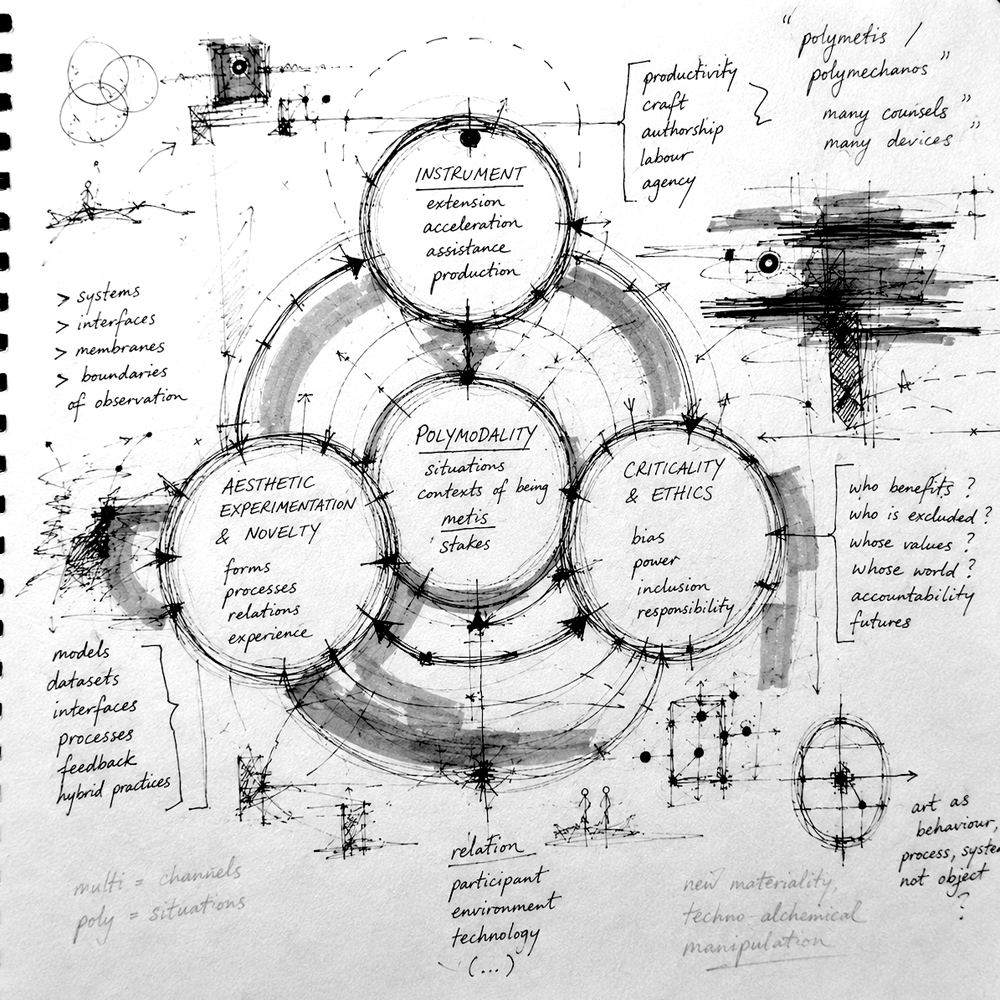
Discussions of generative AI and creativity often collapse fundamentally different practices into a single field. This talk proposes polymodality as a framework for distinguishing how generative AI operates across creative systems: as an instrument extending existing practices, as a space for aesthetic experimentation and novelty, and as a technological apparatus for critical media practice. Central to these distinctions are questions of process: where does AI enter the creative system, what does it transform, and where can novelty emerge? Within these uncertain territories, neo-techno-alchemists experiment with models, processes, materials, interfaces, and forms whose aesthetic possibilities remain largely unmapped. Generative AI emerges as a shifting techno-alchemical ecology in which artist, system, process, and artifact continuously reorganize their relations.
Expanded Voices: When the Medium Starts Talking
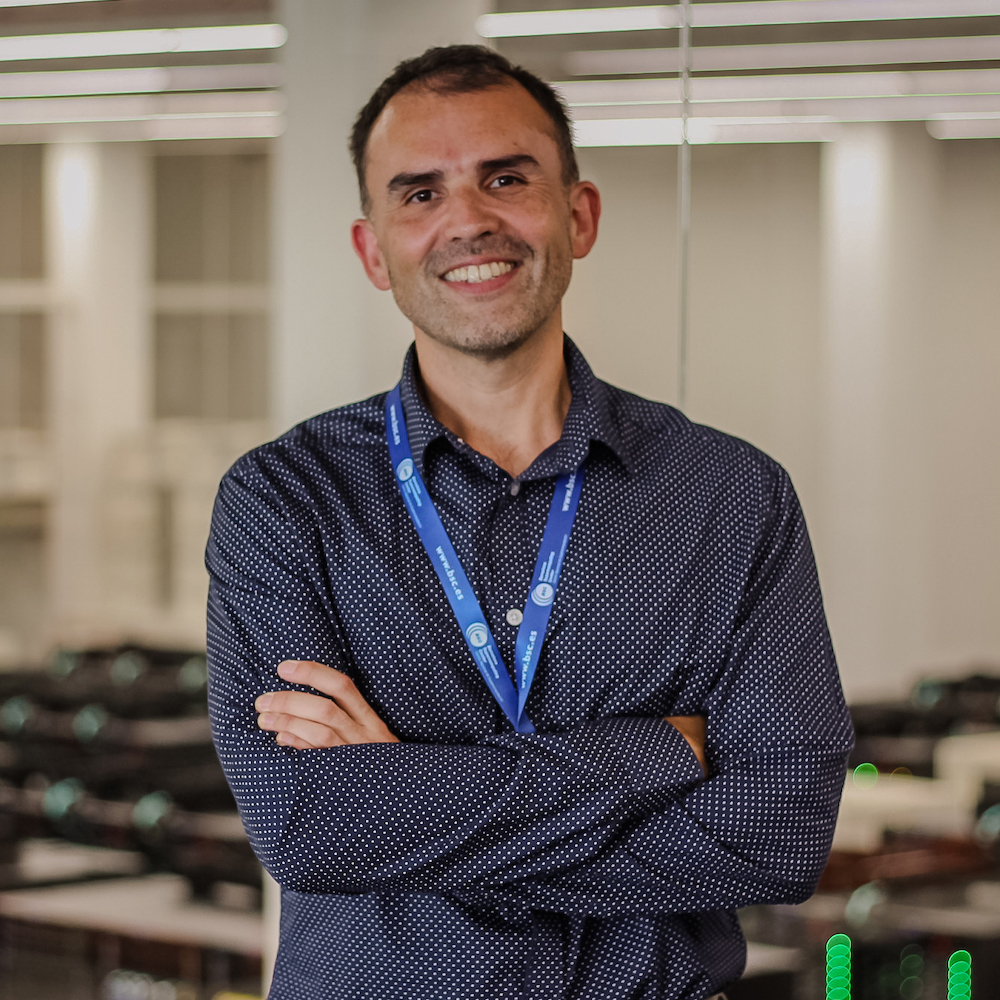
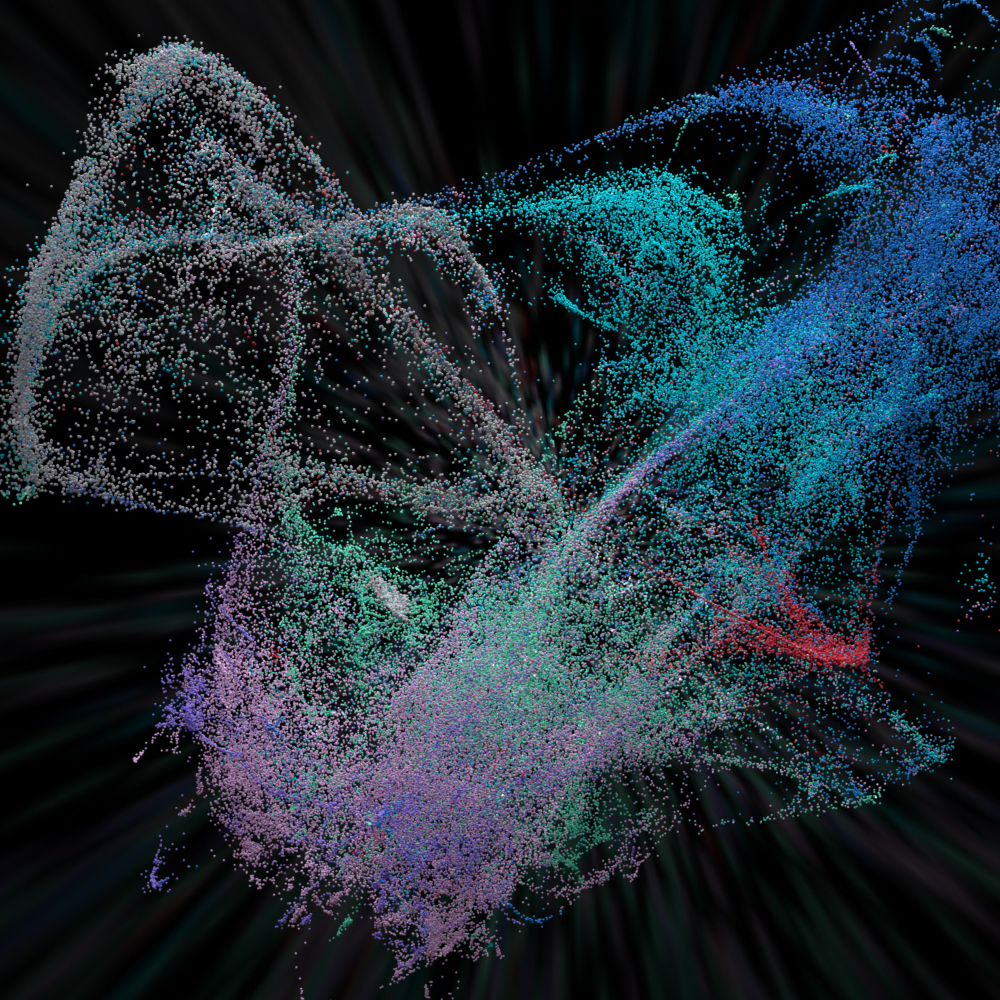
Expanded Voices is a three-year collaboration between singer and artist Maria Arnal and the Creative Intelligence Lab at the Barcelona Supercomputing Center, exploring voice cloning as both an artistic medium and a research instrument. Developed alongside Maria’s 2026 album AMA and presented at SIGGRAPH 2026, the project gradually evolved beyond using AI as a creative tool to treating artistic practice itself as a way of asking scientific questions.
In this spark, I will reflect on my journey from theoretical physics to art-driven AI research, and how collaborating with artists fundamentally reshaped my understanding of AI research. Rather than viewing artists as users of AI, I will argue that long-term artistic collaborations can reshape the questions AI research itself learns to ask.
oillusion: a live time machine
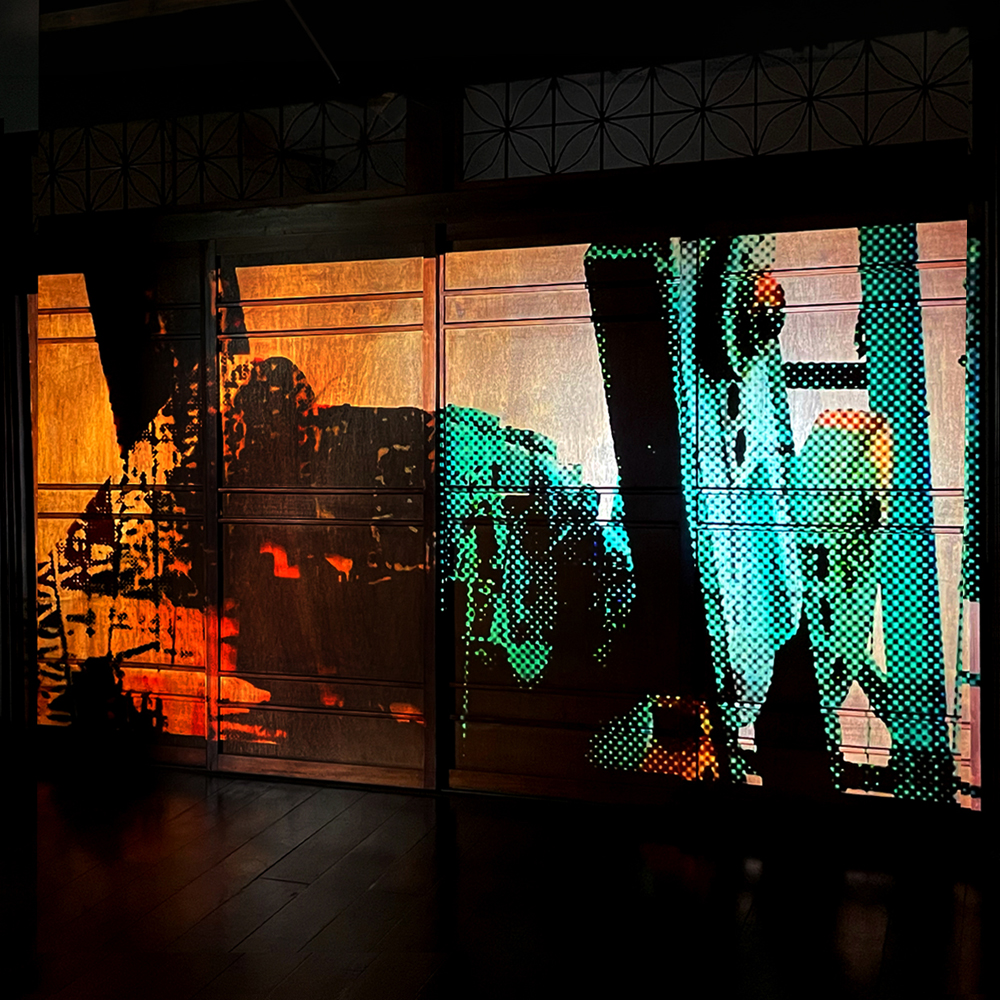
‘oillusion’, developed through ‘kugenuma,’ a multimodal art collaboration between Kio Griffith and Chihiro Minato, uses generative AI to construct a speculative, nonlinear history of an oil-producing region in Miaoli, Taiwan, where histories of Taiwan, Japan, and the United States intersect. Archival images, found footage, personal documentation, and AI-generated fictitious scenes form an audiovisual environment where historical evidence and hallucination coexist. Rather than reconstructing a singular past, AI overlays possible histories of labor, machinery, sound, and multinational influence. Presented across interconnected rooms, the installation functions like a record: Side A is driven by heavy rhythm, Side B by ambient sound. Image and composition evolve together, transforming the installation into a physical instrument, a live time machine through which history can be entered from multiple directions and senses.
Peeling Cycle: Multi-modal Agentic AI and Surrogate Agency in Live Audiovisual Performance
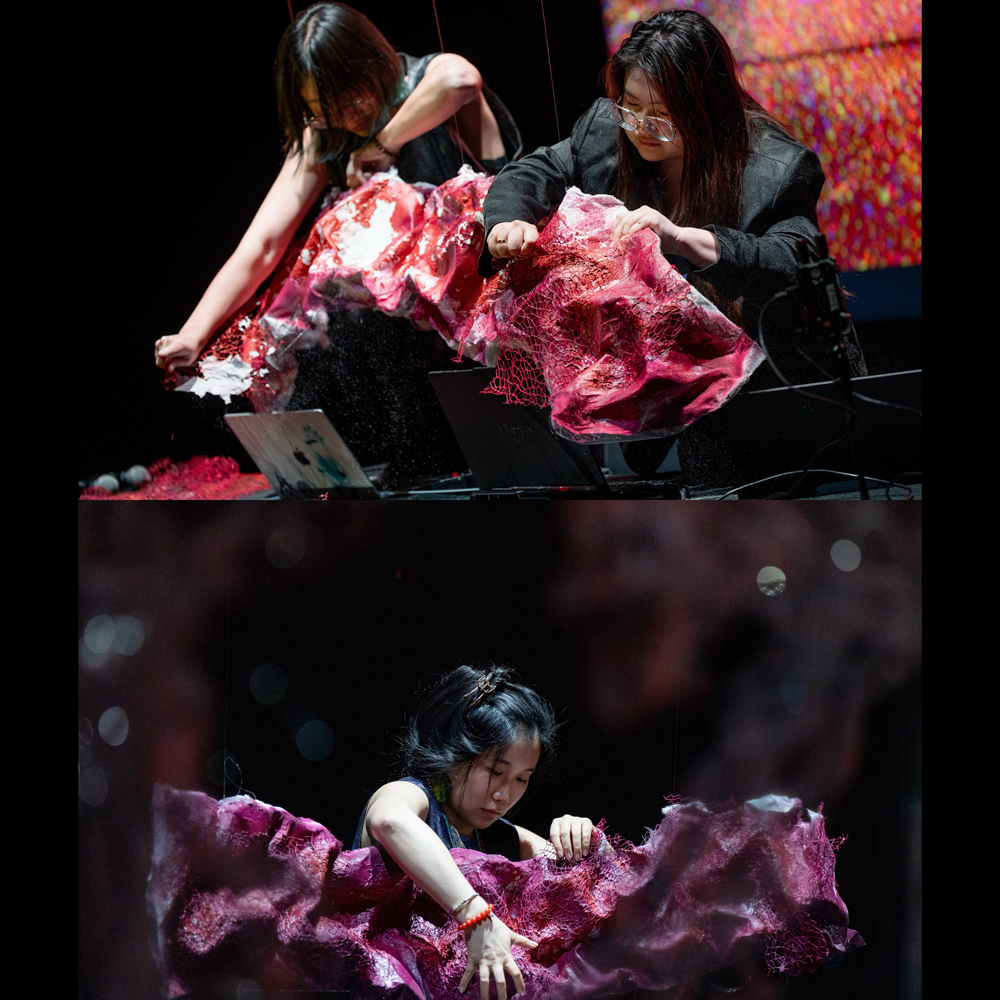
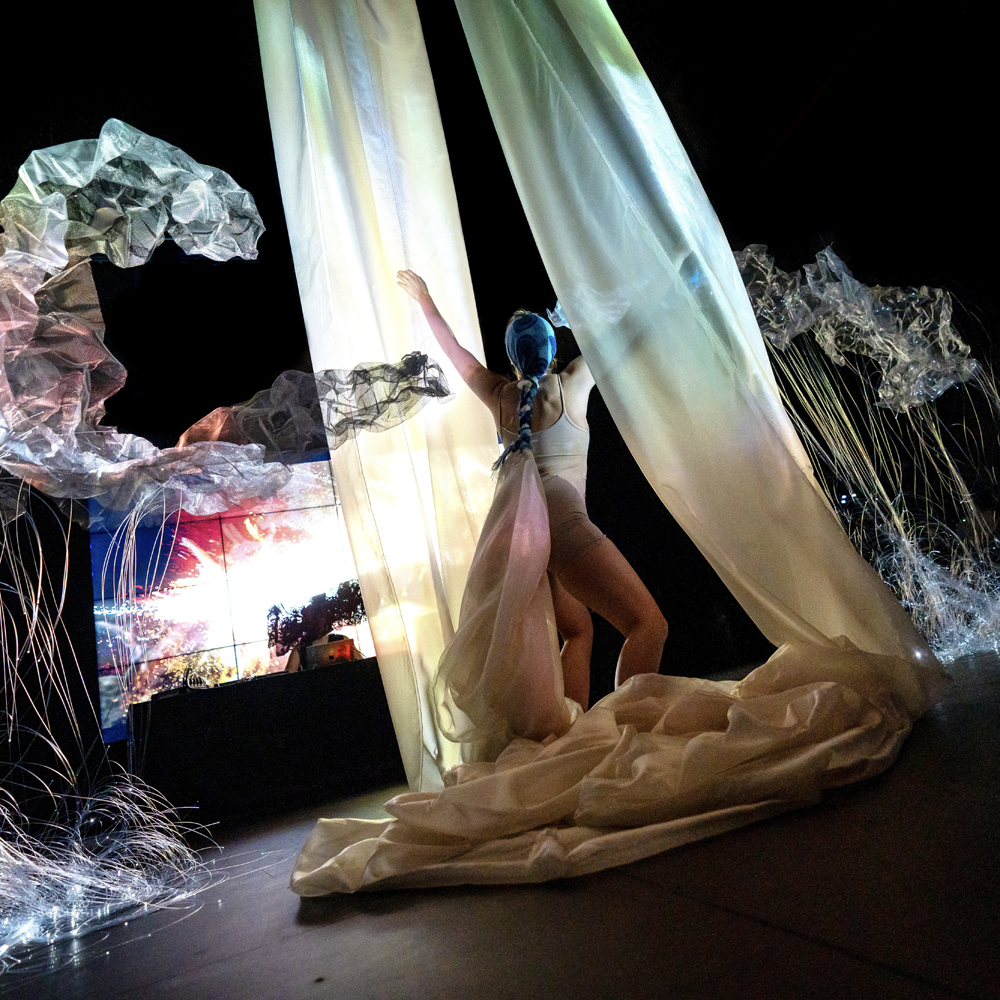
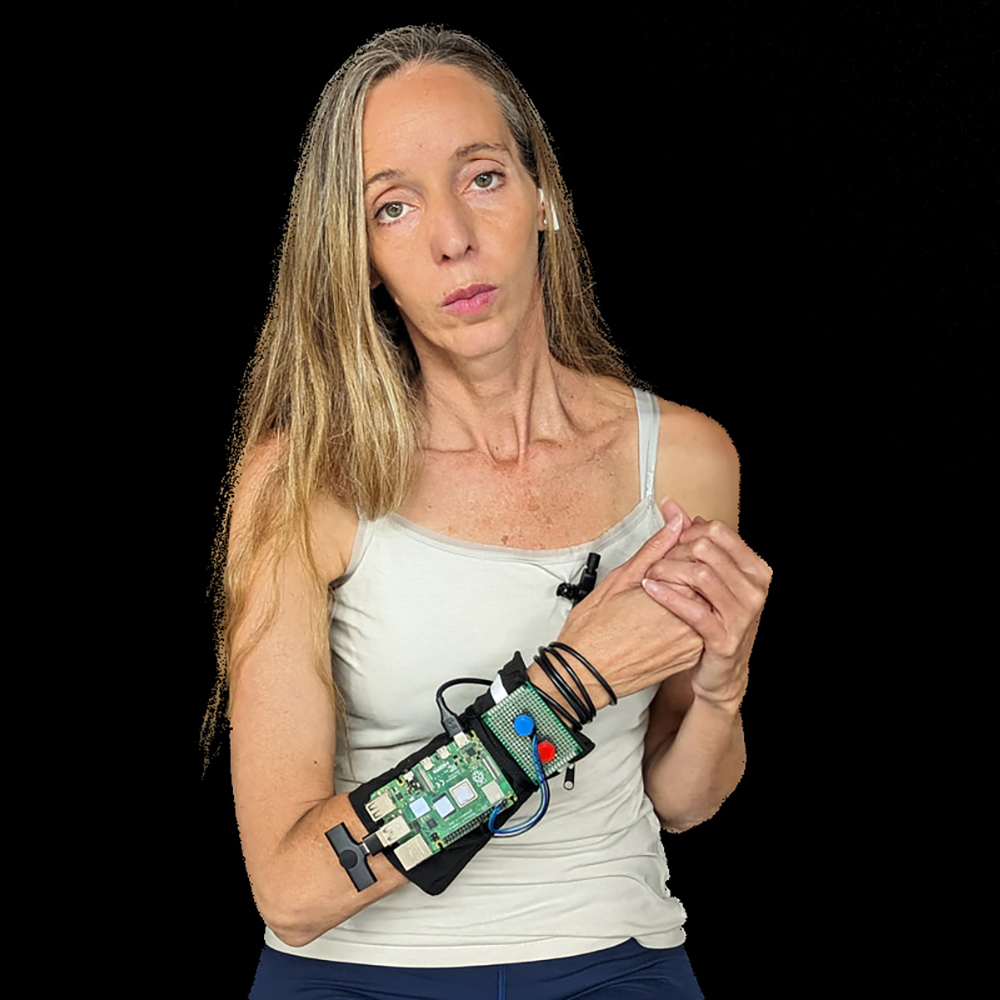
Peeling Cycle (2026) is a live audiovisual performance that combines endoscopic camera imagery, breath analysis, DIY laser projection, multimodal AI, speech synthesis, and real-time visual generation. The work treats AI not as an autonomous creator, but as a social and technical mirror: it scans, classifies, speaks, and re-renders bodies through inherited structures of language, vision, and bias. This preliminary Creative AI artwork description foregrounds the work’s AI-driven visual and speech systems, its video-recorded performance format, and its response to the theme of Agency.
A Happy Mennn is an interdisciplinary multimedia artist trio and research group formed by Anqi Liu, Han Zhang, and Mingyong Cheng. AHM’s works address the lived experiences of immigrant Asian women artists building careers, practicing, and living in the West through the use of technology, sound, and free improvisation performing arts.
REST! – Resting in the Age of AI
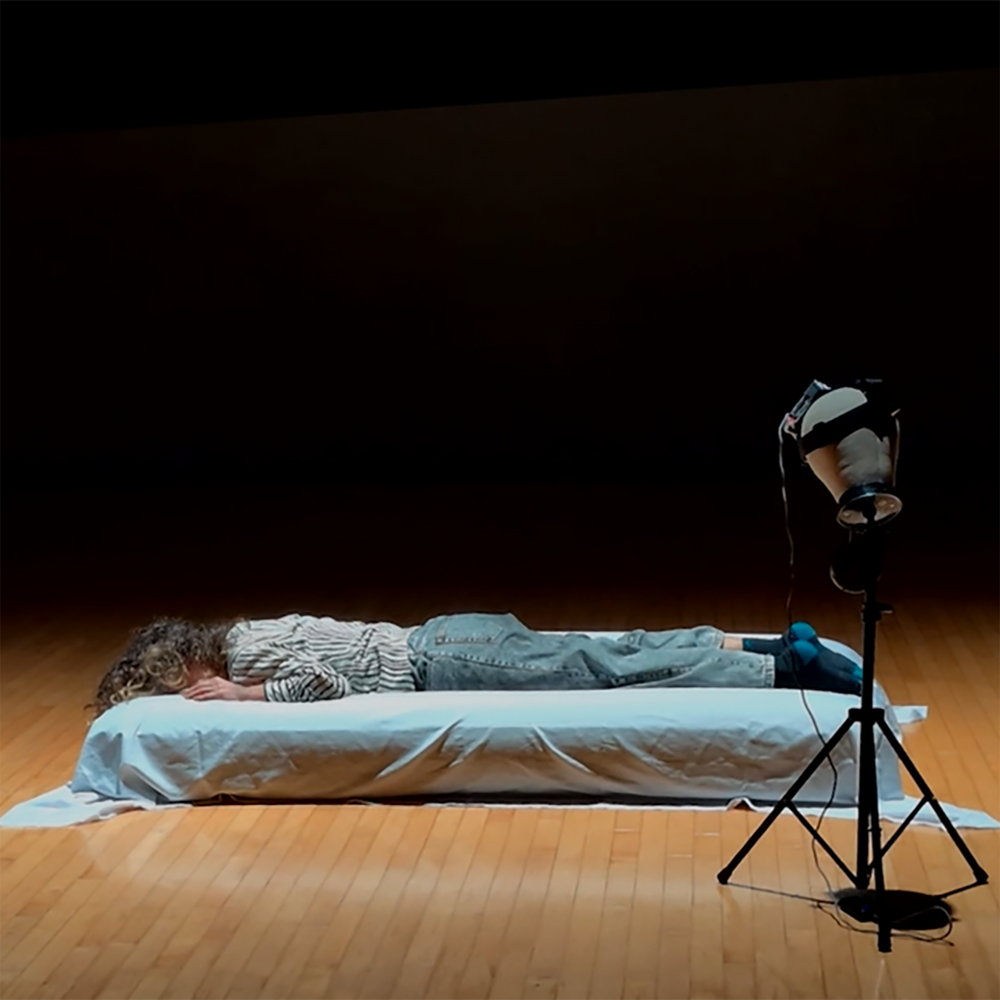
REST! is a durational performance and AI installation that asks whether a technology so often positioned as a tool for acceleration and productivity can instead help a human body stop and rest. A performer lies on a mattress while a camera repeatedly sends images of the resting body to GPT. Guided by a changing set of prompts, the AI speaks back: soothing, encouraging, theorizing, and at times absurdly authoritarian.
The work turns rest into a negotiation between care and control. The AI may grant permission to withdraw from productivity, yet it does so by continuously watching, interpreting, and directing the body. This tension exposes the ambiguity of outsourcing rest to a system that never needs to rest itself. By placing a vulnerable, inactive body under machine observation, REST! asks whether AI can support refusal, slowness, and recovery, or whether even rest becomes something to monitor, manage, and optimize.

Weidi Zhang is a new media artist based in Los Angeles and Phoenix. She is an Assistant Professor at the Media and Immersive eXperience center of Arizona State University. Her research investigates Speculative Assemblages at the intersection of immersive media, data visualization, and AI art. Her works are featured in international awards, conferences, and museums, such as Best In Show Awards in SIGGRAPH, Red Dot Design Award, A’ Design Award, Honorary Mention in Prix Ars Electronica, Lumen Prize Shortlist, ISEA, V2 Lab, Times Art Museum, Mutek, and others. She holds her Ph.D. in Media Arts and Technology from the University of California, Santa Barbara.
Weilu Ge is a composer, media artist based in Cambridge, MA. She works with various media forms, from concert music, installation, performance to video and innovative technology. Her works explore theatrical expressions of sonic, visual and spatial media, taking composition as critical means to examine relationships between power, system, body, and technology in a social-cultural context. She is an active member of IMUU, an artist collective specializing in working with intermedia narratives to create interactive and immersive experiences. Weilu’s works have been presented at festivals and conferences internationally. She is currently a PhD Candidate in Creative Practice and Critical Inquiry at Harvard University.