Artist(s):
· Peijing MouSchool Information:
Artwork Information:
Description:
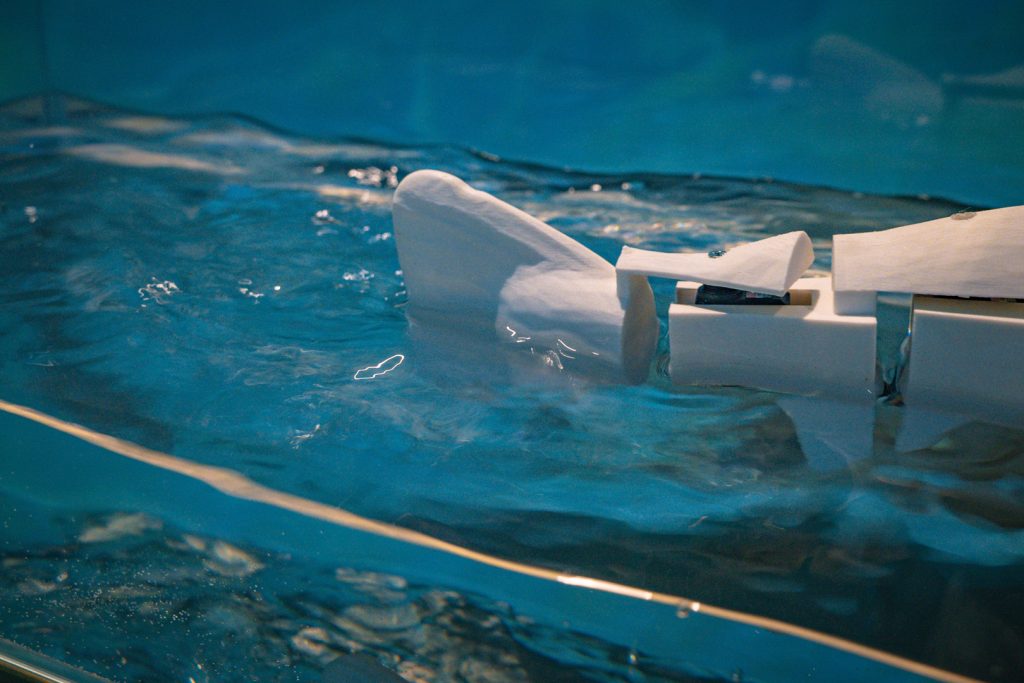
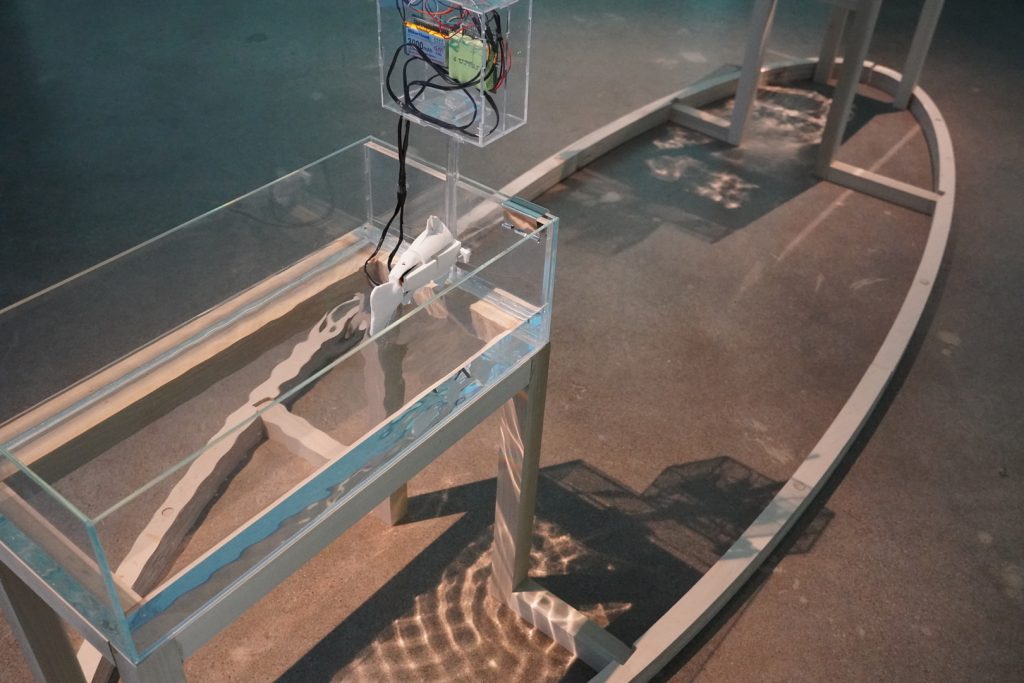
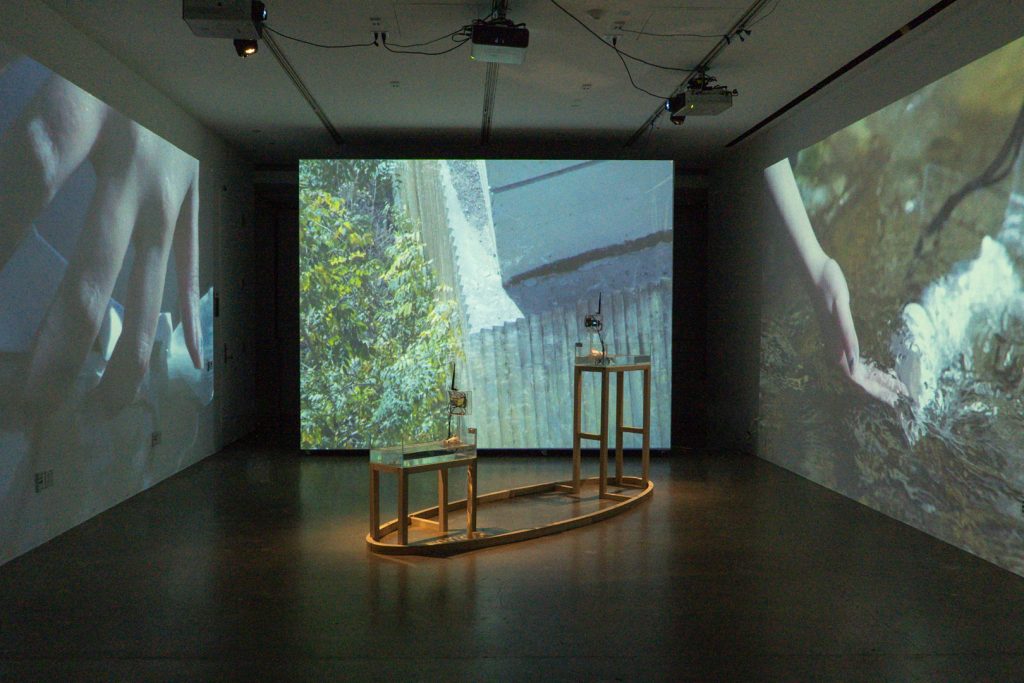
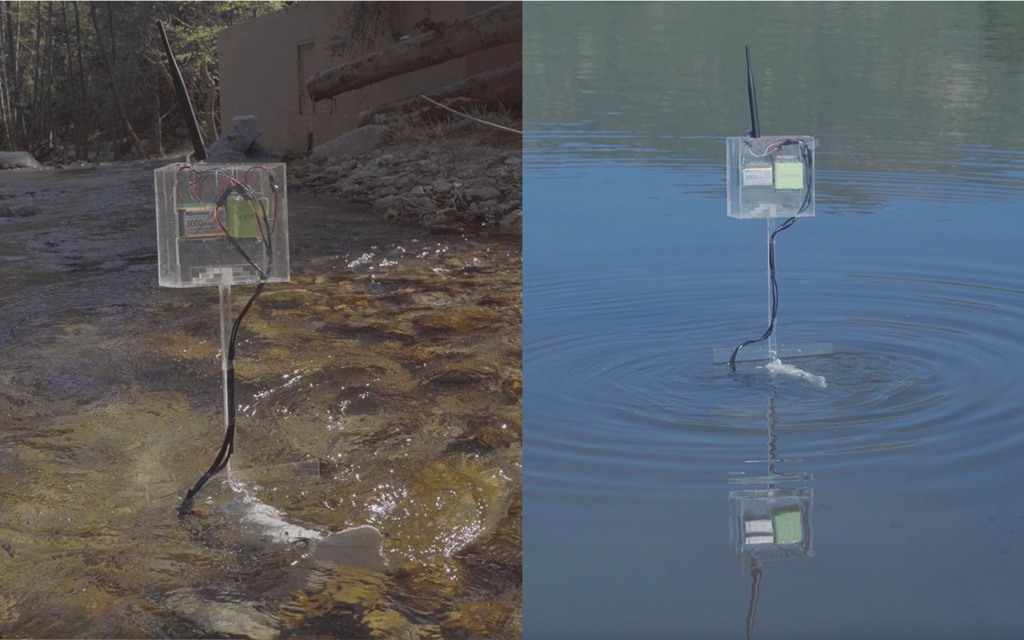
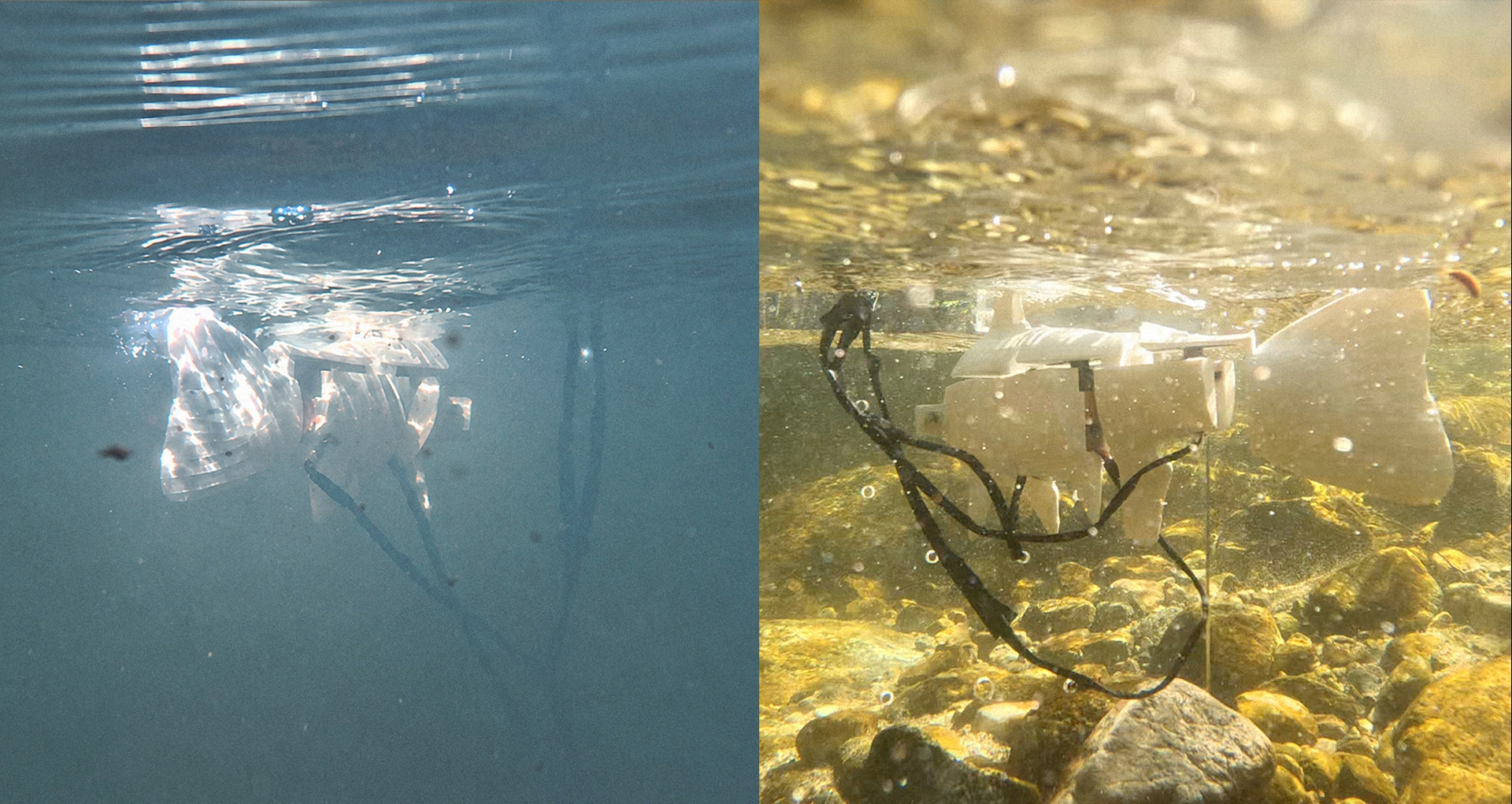
Trout Telephone is a telematic art installation created through field research around infrastructures, and conversations with conservation researchers. For millennia, trout have inhabited Los Angeles’ Arroyo Seco watershed, migrating between forested streams and the sea—an ancestral route now interrupted by a concrete dam. Responding to this ecological injustice, the work places two actuated trout-tail sculptures at divided environmental sites – one upstream in the forest and one in a coastal lagoon. Each station functions as a sensing-and-signaling node built with a microcontroller and camera. When fish activity is detected, a signal is transmitted to the counterpart site, where a trout-tail performs a movement pattern in water. This project creates a call-and-response system between the distant extremes of the trout populations through a real-time network.
Rather than decoding trout behavior, Trout Telephone explores communication through nonhuman perception: water pressure, tail beats, and hydrodynamic disturbance. It redirects Edge AI, sensors, and wireless networks away from monitoring and extraction, toward ecological care and communication for nonhuman lifes.
Developed as an on-site installation, experimental documentation, and an indoor gallery version, this project contributes a more-than-human model of ecological care and communication, where technological infrastructures are reoriented towards nonhuman perception and damaged habitats.
Technical Information:
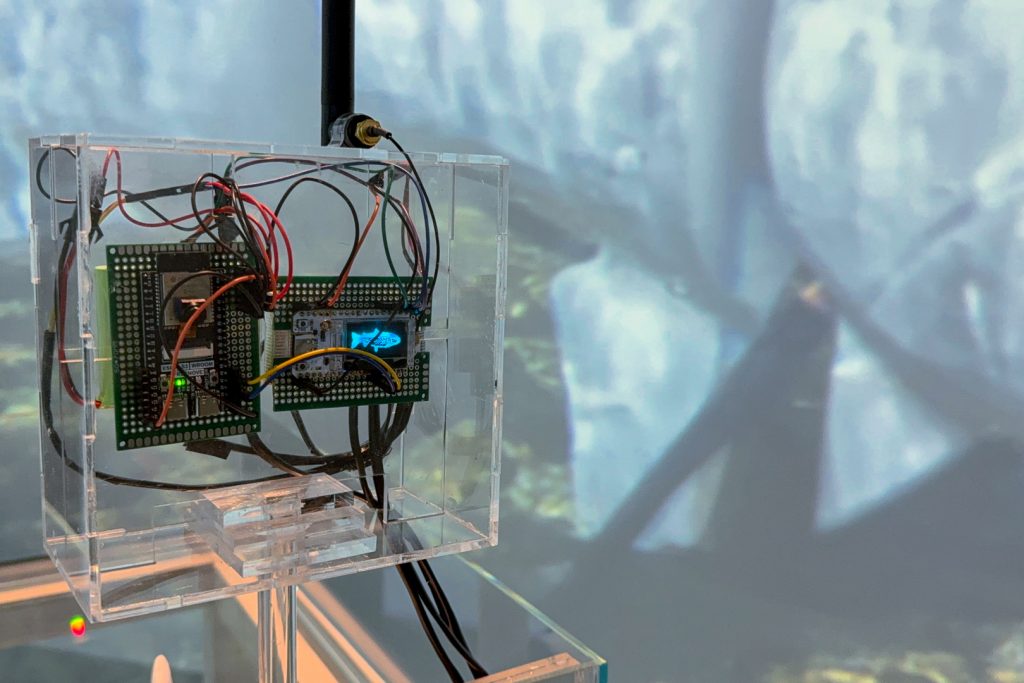
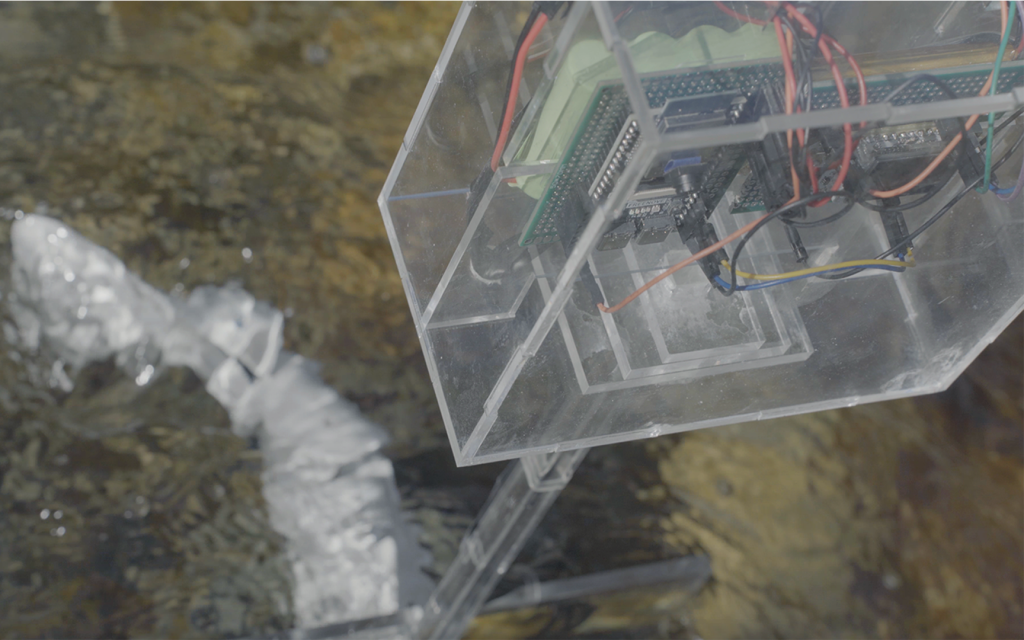
Trout Telephone creates a microcontroller-based sensing and long-distance signaling system. Each station includes an ESP32, camera module, LoRa transmission module, OLED screen, rechargeable batteries, and waterproof servo motors. A custom trout image dataset was trained as an edge AI detection model for ESP32 deployment. When fish activity is detected locally, the ESP32 sends a signal through LoRa to the counterpart station far away. The receiving station activates servo-driven trout-tail sculpture, producing tail-beat movements and water disturbances as hydrodynamic signals. The trout-tail sculptures are digitally modeled from real trout tails, 3D printed, and waterproofed for outdoor installation.
Additional Images: