
Berlin, Germany Fri, May 29, 2026 at 4:00 pm CEST
New York, USA Fri, May 29, 2026 at 10:00 am EDT
Los Angeles, USA Fri, May 29, 2026 at 7:00 am PDT
Hong Kong, Hong Kong Fri, May 29, 2026 at 10:00 pm HKT
This SPARKS session treats animism as a way of knowing and making relations with a more-than-human world. Drawing on Nurit Bird-David’s notion of animism as a relational epistemology, and on perspectivist approaches that treat worlds as ontologically plural and situated, the session considers how creative practices might reopen and complicate animist ways of sensing, valuing, and coexisting. Instead of locating mind in isolated systems, we focus on how the convergence of artificial and biological intelligence already enacts cognition as a shared, relational process. Discussions of techno-animism and digital animism describe how technological objects become partners in distributed agency, memory, and care. Artists and designers are in a key position to shape how these relations look and feel, and to question which cosmologies they reproduce or transform.
We invite digital artists, architects, designers, filmmakers, performers, and urban practitioners whose work revisits animism in relation to computational media. Possible works include AI driven installations that treat models as partial perspectives rather than omniscient tools; architectures that engage local cosmologies and more-than-human neighbors; game worlds and XR environments that stage perspectival shifts between different beings; and films or essayistic practices that experiment with cosmotechnics as a way to mediate between disparate perspectives, technology, and locality. Animism Revisited aims to gather practitioners who explore these questions in concrete works, protocols, and environments, opening shared spaces to think and feel how new technologies might support older and emerging ways of relating across worlds.
Areas of focus include (but are not limited to):
- Artworks, installations, films, and games that treat AI or algorithmic systems as situated perspectives rather than neutral tools.
- Media art and design practices that explore techno-animism or digital animism in everyday relations with devices, platforms, and infrastructures.
- Architectural, urban, and landscape projects that engage local cosmologies, spirits, or more-than-human neighbors in the design of spaces.
- XR, game, and interactive works that stage perspectivist worlding, allowing audiences to inhabit incompatible viewpoints or “multinatural” environments.
- Practices of cosmotechnics that use digital tools to mediate between disparate perspectives, such as community-based work in rural or urban settings.
- Responsive, kinetic, or robotic artworks that foreground ritual, care, and reciprocity in human–machine and more-than-human relations.
- Projects that critically and creatively address animism’s decolonial stakes, including collaborations with Indigenous knowledges and cosmologies, handled with attention to consent and context.
- Essayistic, curatorial, and pedagogical experiments that treat cinema, VR, or other media as “thinking practices” for sensing and composing plural worlds.
Animism and Ontological Perspectivism in the Western Context: A Trucker’s Perspective
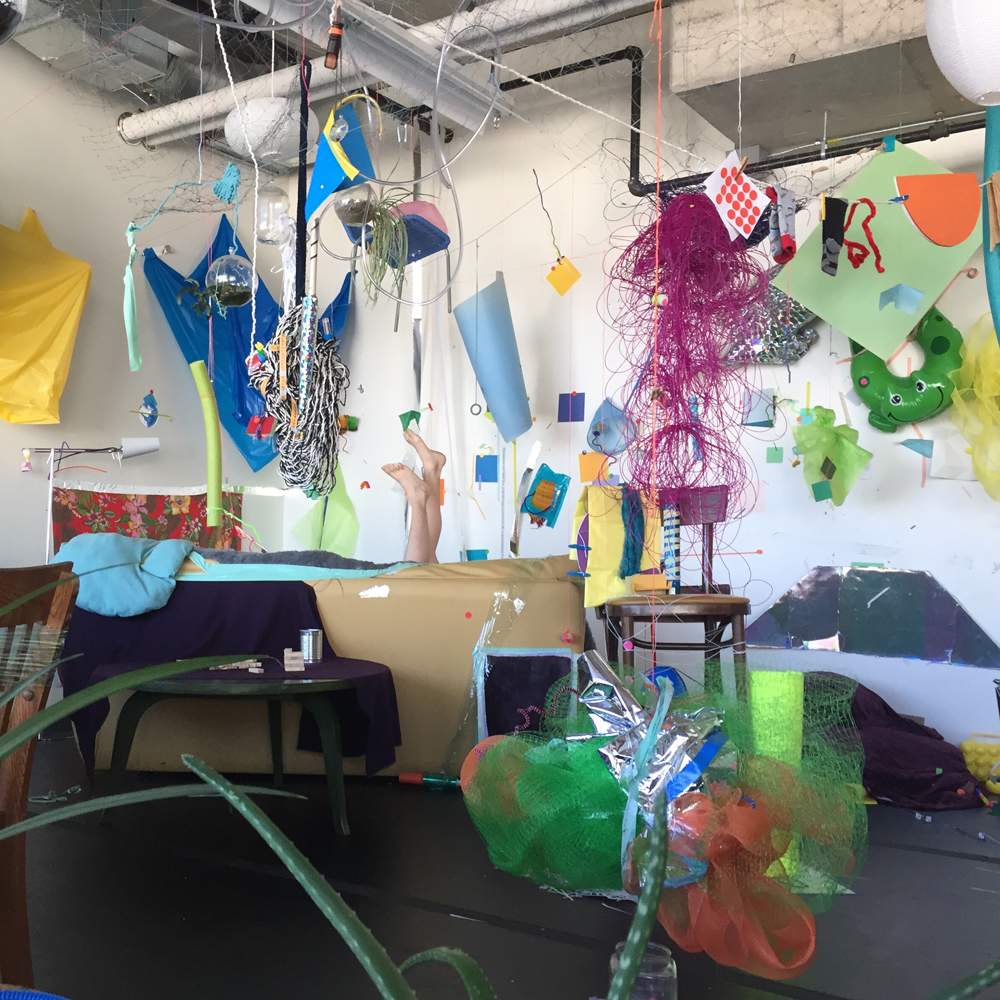

This talk explores what Eduardo Viveiros de Castro calls “ontological perspectivism” by contrasting it with classical notions of animism and anthropomorphism. I argue that perspectivism reconceives relation as primary and non-substantial, unfolding through events and bodily affects rather than fixed essences. Through the anthropology of Serge Bouchard’s Du diesel dans les veines, which studies Québécois truckers’ animistic relation to their machines, the talk demonstrates how Western modernity contains plural ontologies within itself. Bridging Viveiros de Castro’s multinaturalism with Spinoza’s conception of affect and the “spiritual automaton,” it proposes that the trucker’s attunement to the machine constitutes a lived cosmology of forces and affects. Such a cosmological outlook challenges this modern bifurcation of nature and culture, suggesting that even within the ‘one-world world’ of Western thought, transversal relations persist that animate the social beyond the human.
From Objects to Subjects: Rethinking Machine Vision through Perspectivism
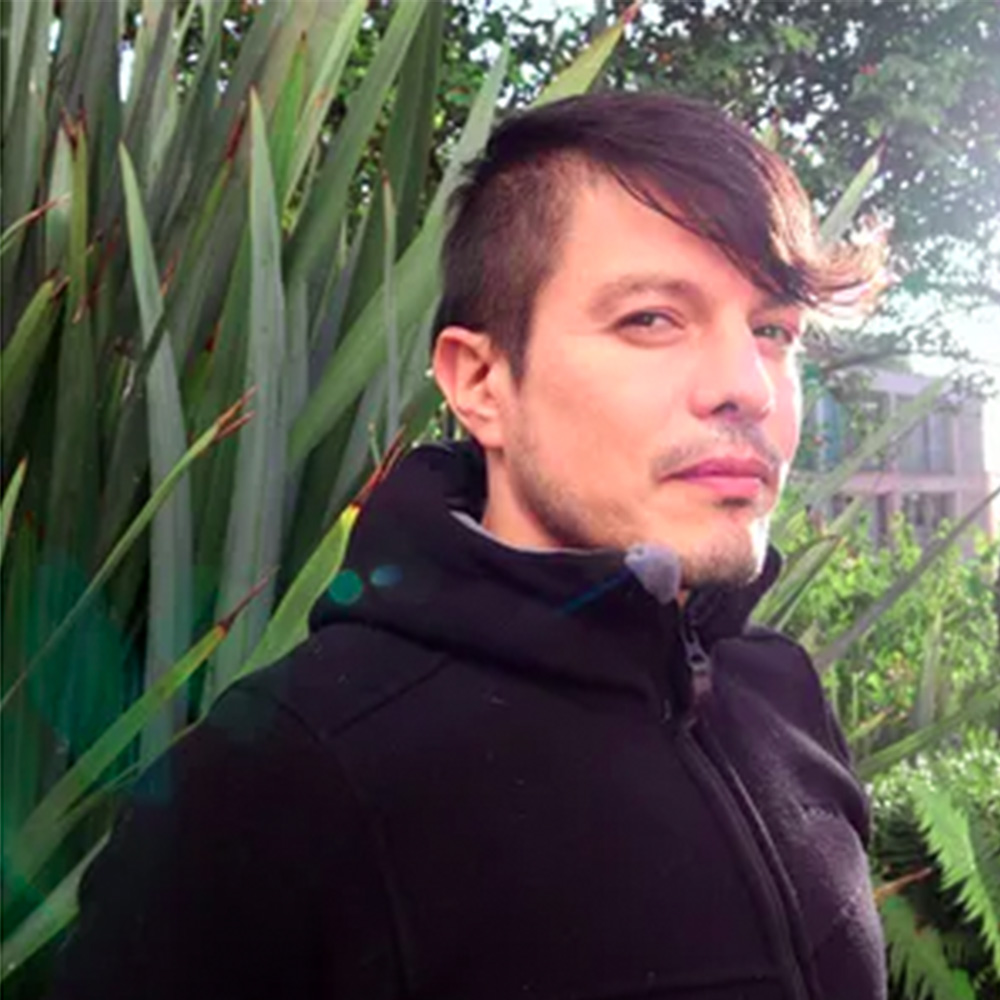
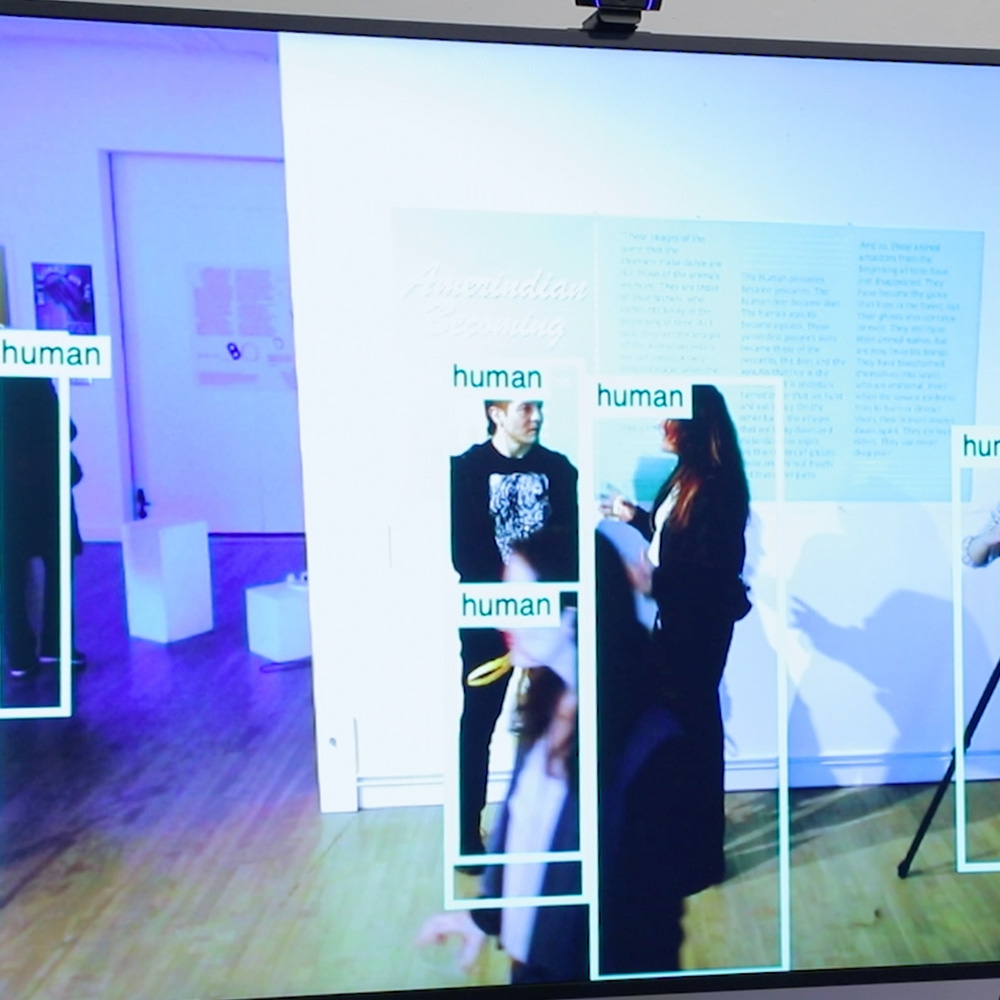
This talk explores object recognition models such as YOLO not merely as technical tools but as dispositifs that extend colonial logics of classification. By transforming the world into discrete, measurable objects, these systems echo the production of exteriority described in theories of raciality, where beings become knowable, governable, and differentially valued. Machine vision thus participates in a broader trajectory that turns life into objects of calculation. Drawing on perspectivism, the talk considers an alternative: what if objectification did not imply domination? Perspectivism challenges the division between subject and object by proposing that all beings inhabit their own perspectives. From this view, object recognition can be reimagined not as fixing entities into static categories but as encountering a plurality of perspectives, opening the possibility of recognizing not only objects but also subjects.
Steering Through the Inner Residue
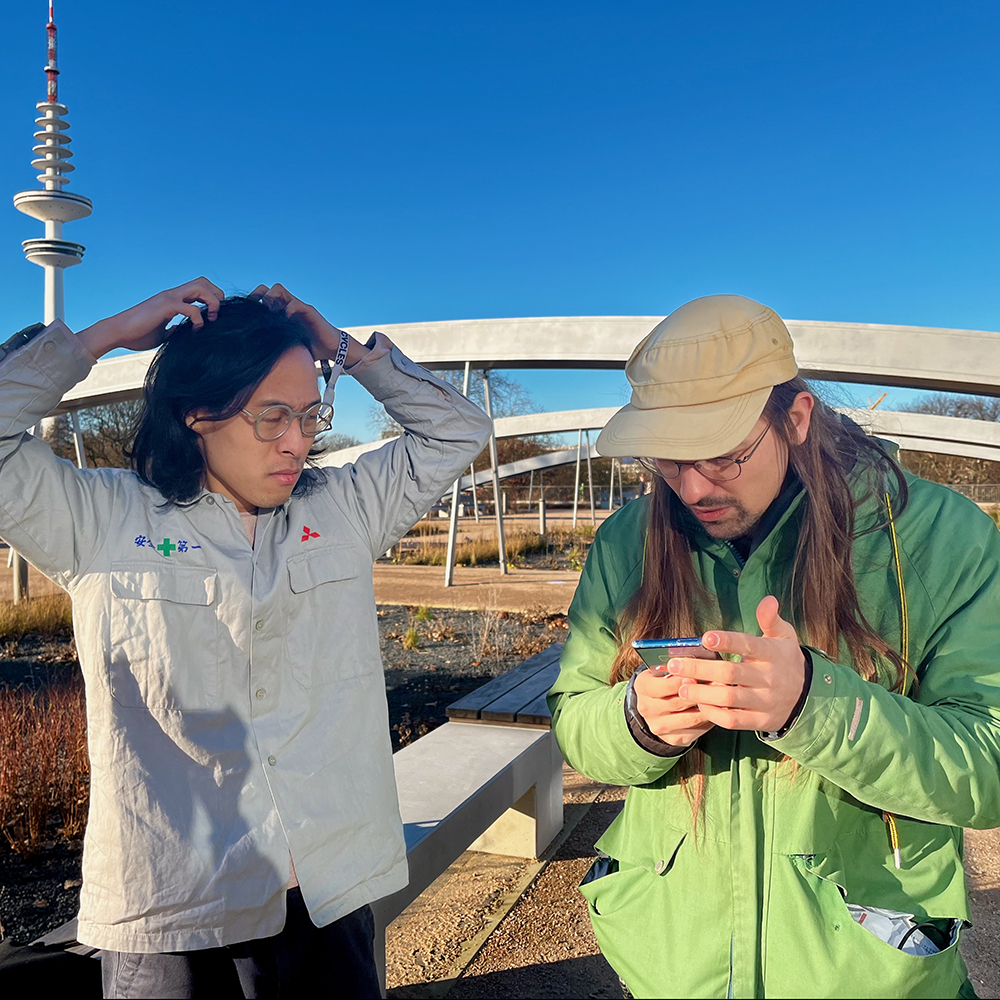
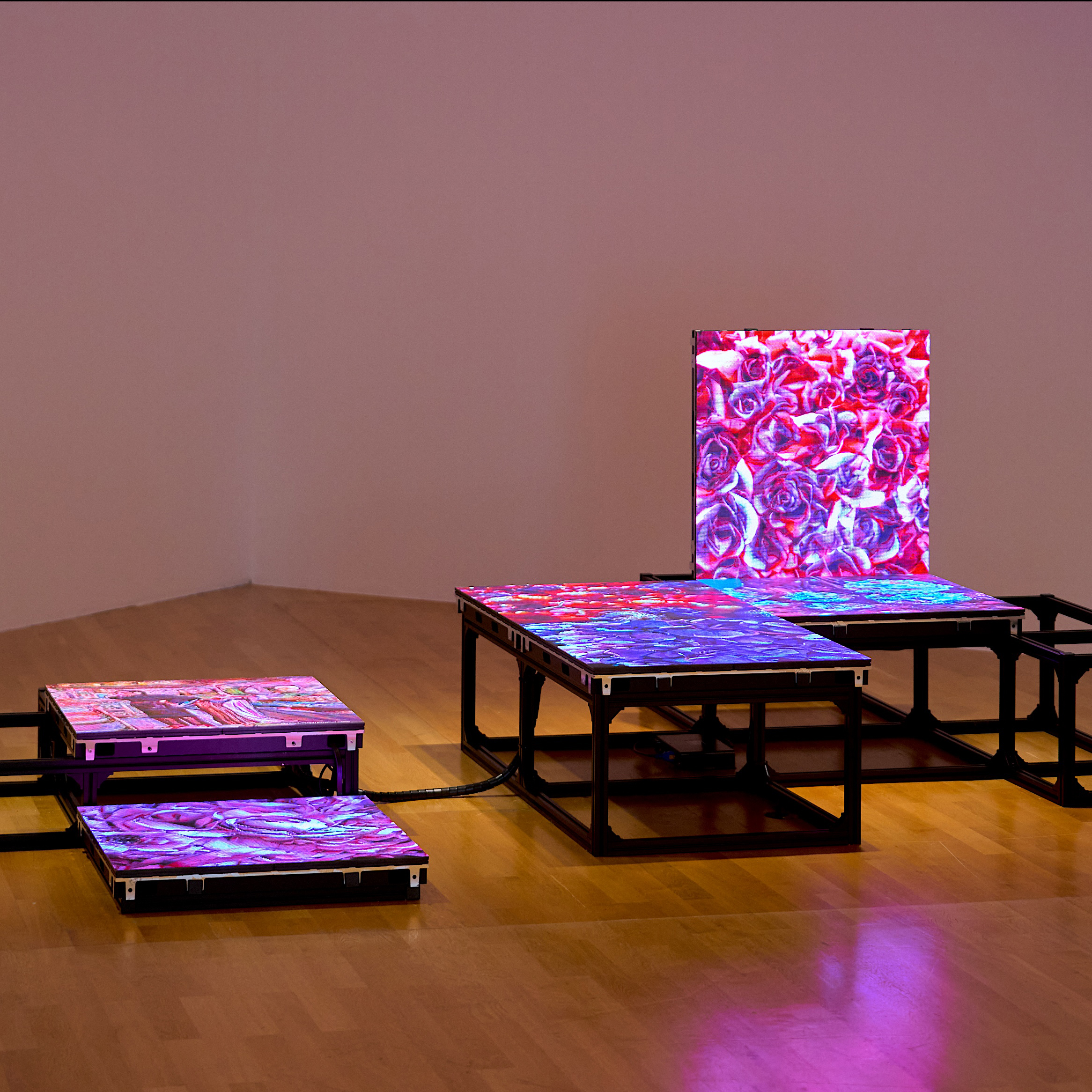
What happens when a system confronts its own output? Steering Through the Inner Residue is a video installation that uses recursive feedback to investigate the media specificity of generative artificial intelligence. By feeding the output of diffusion models back as input, without any textual prompt, the work bypasses human intention entirely, allowing the machine to navigate itself.
Drawing on Alvin Lucier’s I Am Sitting in a Room (1969), where a room’s acoustic resonance becomes audible through repetition, the project translates this logic into generative image-making. Each iteration accumulates small deviations. Visual motifs converge over time, not by design, but as the system’s own aesthetic signature. The result is not an image but a process: an algorithmic residue that reveals the internal tendencies of generative models and challenges assumptions about authorship, intention, and machine creativity.
Uncanny Portraiture: Capturing a Breath of Emotion

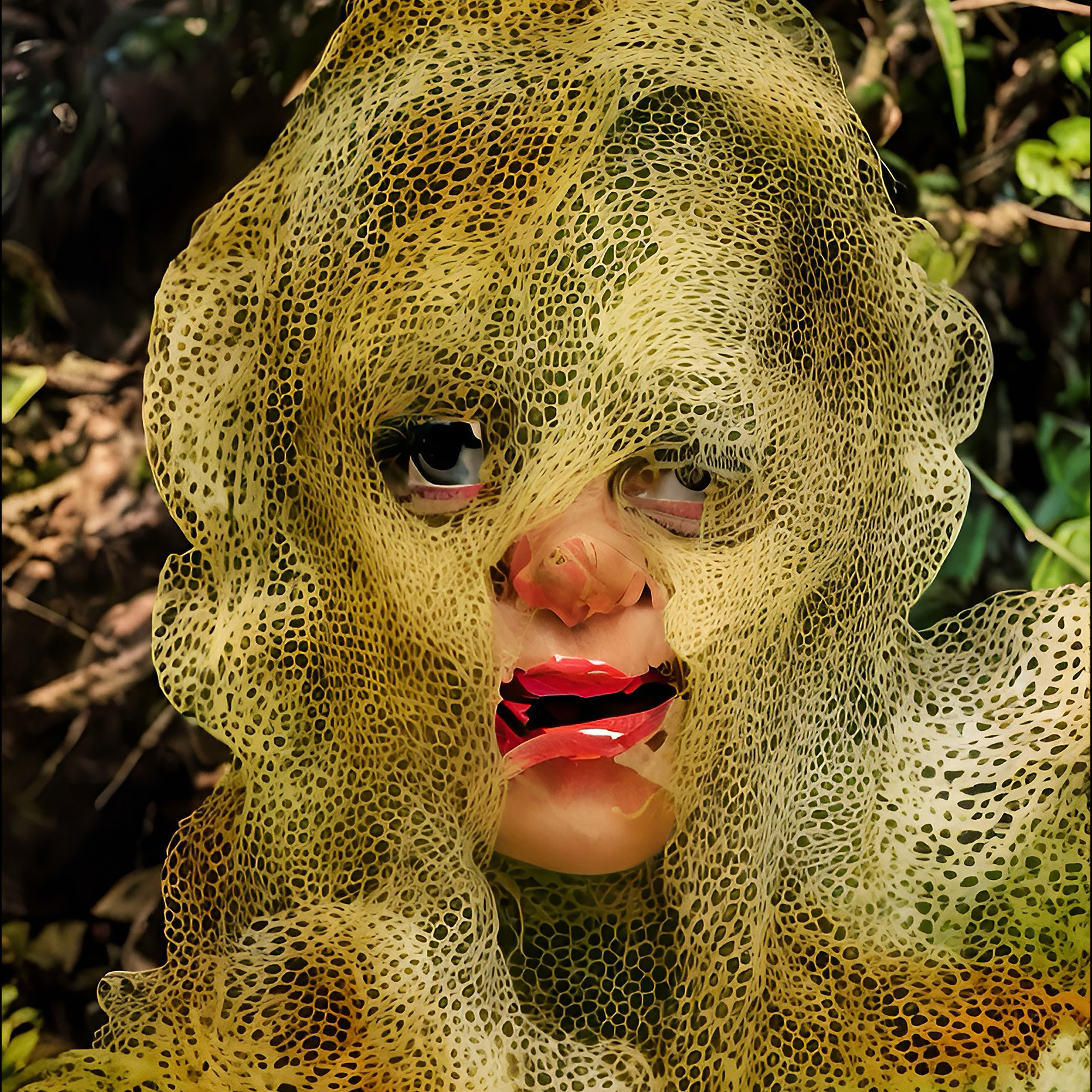
I am interested in capturing a breath of emotion. My research into moving image portraiture and generative Ai character development has sparked my interest in the power of empathetic simulations to bring these unreal and inanimate characters to life. My pursuit of uncanny empathy via mirroring facial expressions and emotional gestures is to explore meaning, association, and understanding across communities. I will present a glimpse into the character development of my original artwork, from still to moving image via apps on my iPhone and laptop using vector mask, template and Ai tools that result in a unique creation of personality and animus.
Skin Series: Techno-Animism
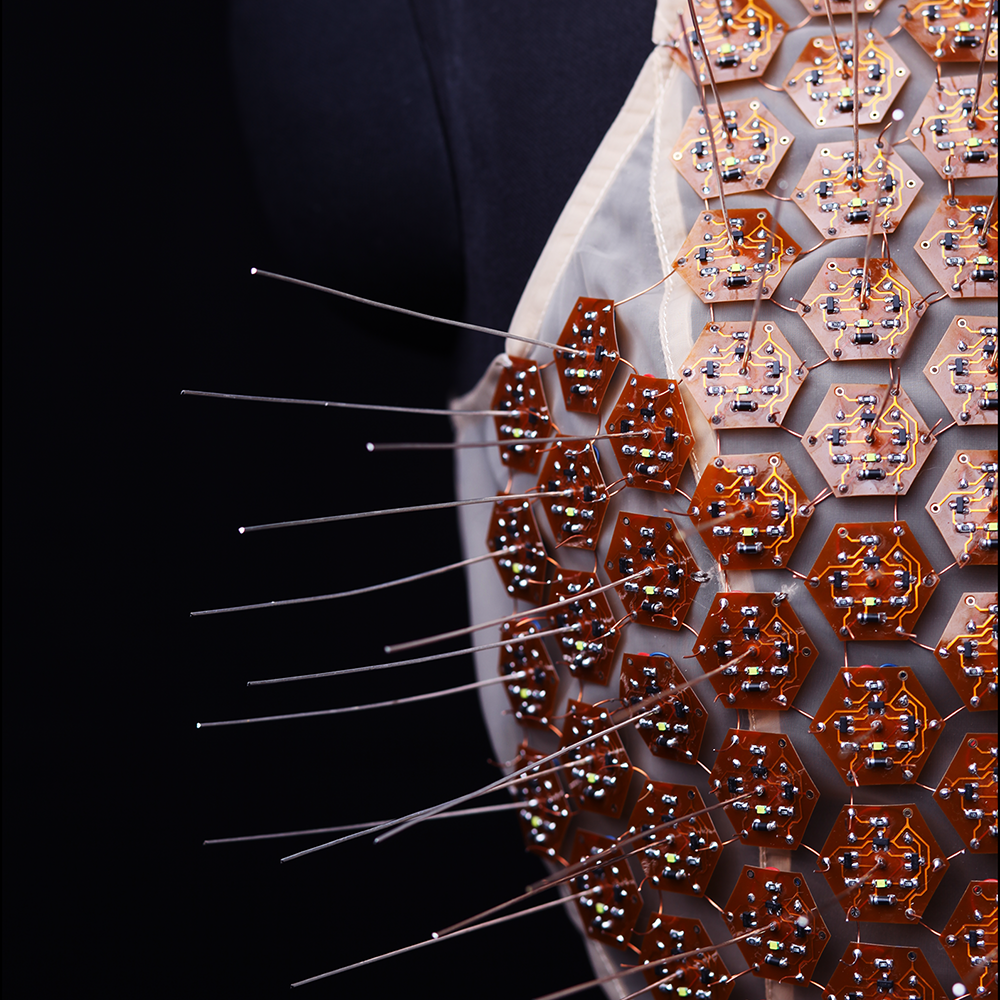
Skin Series is a series of speculative wearable devices that explores animal perception through embodiment and human agency. Referencing biologist Jakob von Uexkull’s theory of the umwelt (lifeworld), the series draws on philosophical discussions of the lived experience, where the body becomes an arena and tether between organism and reality. Reality unfolds with behavior, informed by the perceptual body schema of the individual. The work asks: what role can technological intervention play within this dynamic? The series answers this question by challenging the humanist body construct in favor of an open, fluid, and elastic phenomenological body. Animalistic sensory capacities are mapped onto the human form through custom designed wearables. These technological bodies, through performative behavior by the wearer, sets into motion a transitional process of becoming other, a techno-animism.
Trout Telephone
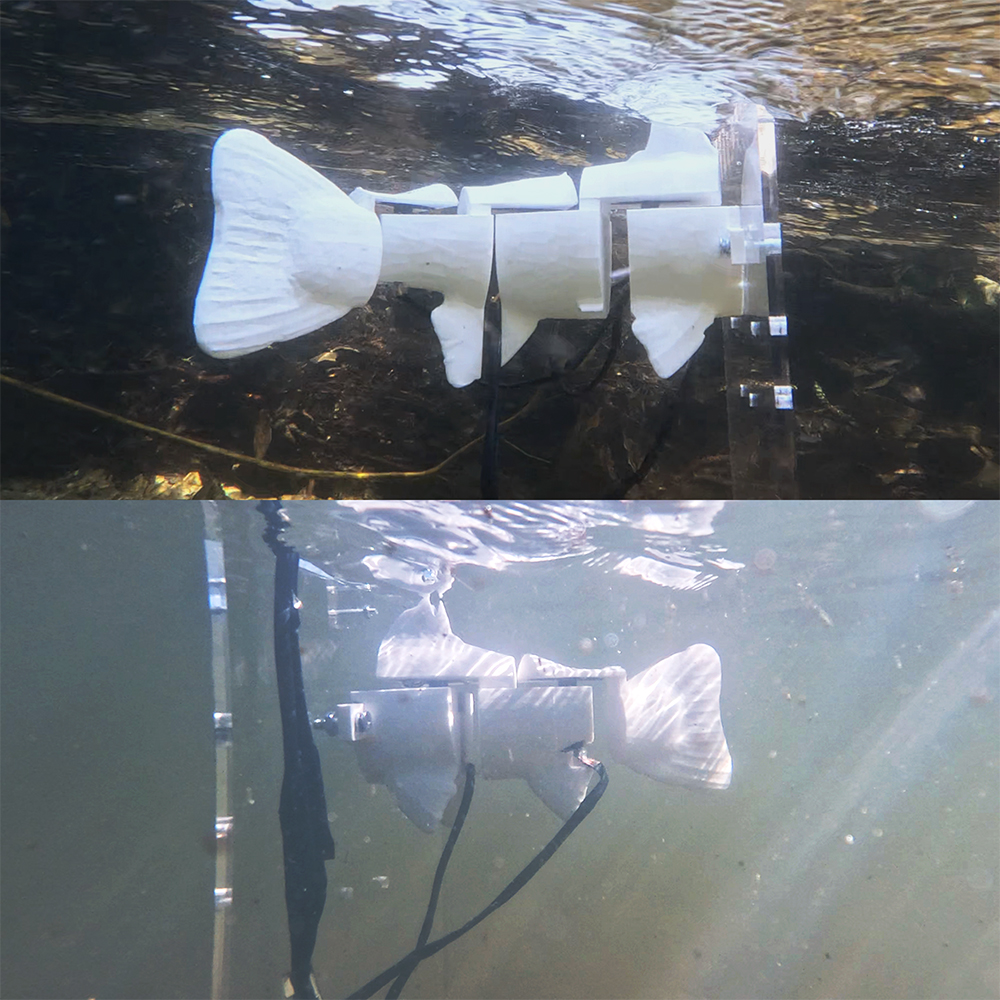
This talk introduces Trout Telephone, a telematic art installation that presents a communication system for trout across habitats, fragmented by dam constructions. For millennia, trout have inhabited the Arroyo Seco watershed in the Los Angeles basin, migrating between a river surrounded by forest and the sea — an ancestral route now interrupted by human interventions and concrete infrastructures. Responding to this ecological injustice for non-humans, the work places two actuated trout-tail sculptures at the divided sites — one upstream in the forest, one in a coastal lagoon. The project links them through a real-time network, creating a technical call-and-response system across the distant extremes of the trout populations. Developed as an on-site installation, experimental documentation, and an indoor gallery version, this project contributes a more-than-human model of ecological care and communication, where technological connections are reoriented toward non-human perception.
Decolonial AI and Quantum Imaginaries: Translating Scientific Knowledge through Indigenous Design and Media Architecture
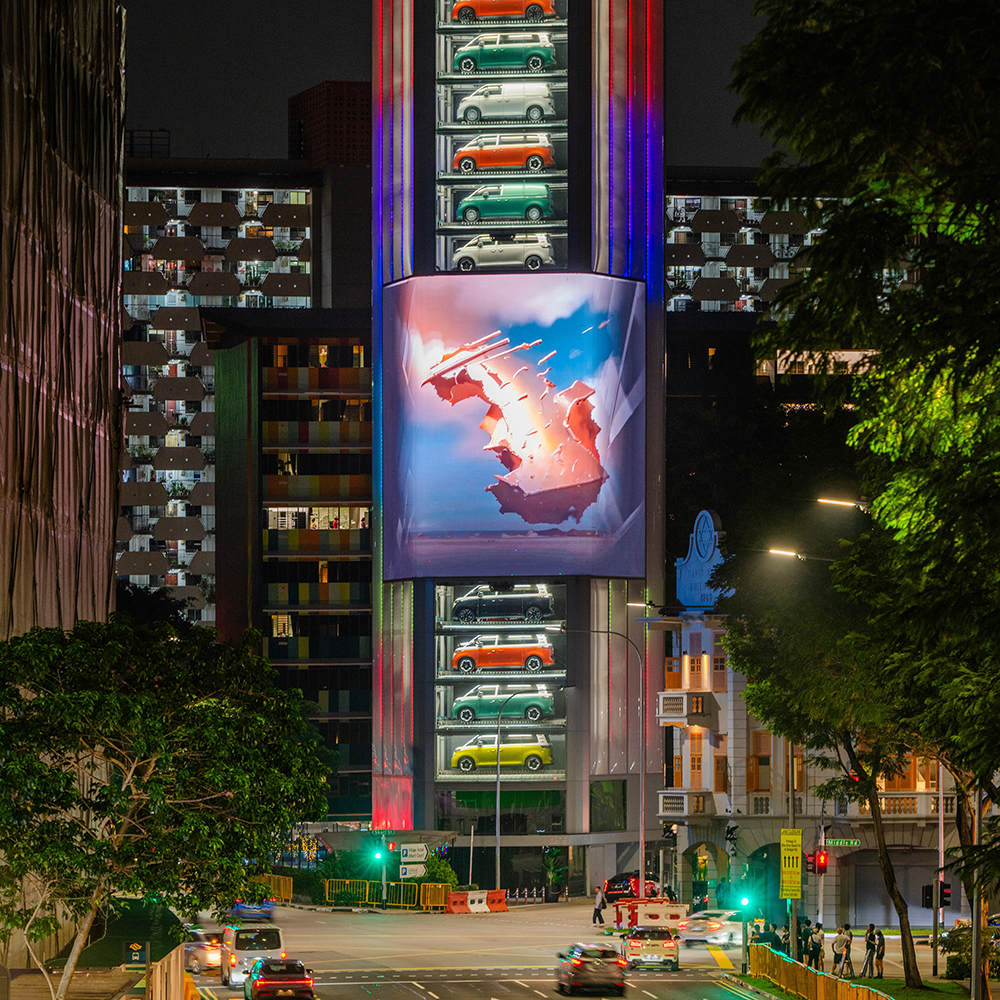
We present an interdisciplinary approach to translating quantum art and generative digital techniques into immersive, public-facing media artworks grounded in decolonial methodologies and Indigenous design systems. Drawing on large-scale installations, experimental animation, and urban screen projects developed at Nanyang Technological University and with international partners, the talk examines artistic visualization as a critical interface between scientific abstraction, cultural knowledge, and public perception.
The presentation frames media architecture and AI-driven visual systems as curatorial tools for re-situating scientific narratives beyond Eurocentric epistemologies, emphasizing biocultural worlding and symbolic design logic. Through selected case studies, we demonstrates how generative pipelines and collaborative art–science production models support new pedagogical and exhibition strategies for ethical AI and media based contemporary science communication.

Michael Just is a transdisciplinary artist and founder of Michael Just Office & Studio. Currently a PhD candidate at the City University of Hong Kong, School of Creative Media, he is incoming Assistant Professor at Bilkent University, Faculty of Art, Design, and Architecture. He was a guest researcher at TU Delft, Faculty of Architecture and the Built Environment in 2024, supported by the CityUHK Research Activities Fund Fellowship. As a Steering Team member at DigitalFUTURES, he co-organizes the Doctoral Consortium on Architecture & Philosophy and Artificial Intelligence. He holds MFA degrees from the Kunstakademie Düsseldorf (Prof. Daniel Buren) and Goldsmiths, University of London and is an alumnus of the Whitney Museum of American Art Independent Study Program. Recent teaching includes Hong Kong Baptist University AVA and the China Academy of Art, Hangzhou.

Dr. Gustavo Alfonso Rincon (Ph.D., M.Arch., M.F.A., B.S, B.A.) earned his doctorate in Media Arts and Technology at UCSB. Rincon is educated as an architect, artist, curator, & media arts research scholar. His academic works have been exhibited nationally & internationally along with serving clients globally. His work with DigitalFutures has gained a global audience with a yearly program along with a series of free summer workshops. His dissertation “Shaping Space as Information: A Conceptual Framework for New Media Architectures,” led to a Postdoctoral appt. at the AlloSphere Research Facility, affiliated with the Media Arts & Technology Program, California NanoSystems Institute at the University of California, Santa Barbara.