
Southeast Asia is rapidly emerging as a dynamic hub for interactive and generative visual practices. In recent years, young artists and researchers across Vietnam, Thailand, and Indonesia have begun to adopt creative coding, machine learning, sensor-based interactivity, and computational design methods to articulate perspectives that diverge from the dominant Euro-American discourse of new media art. Their work often arises from hybrid cultural lineages, informal knowledge networks, and resourceful experimentation in contexts where institutional infrastructures are still developing.
This SPARKS session brings together several early-career artists, designers, and researchers who are shaping new trajectories for generative and interactive visual culture in the region. Rather than focusing solely on polished outcomes, the session highlights process, experimentation, and context: how these practitioners learn, collaborate, and invent with limited access to tools, how local socio-cultural environments influence their creative decisions, and how they redefine concepts of interactivity and authorship within Southeast Asian frameworks.
Through short presentations and an open discussion, the speakers will share their practices in fields such as real-time generative systems, creative AI, computational animation, kinetic installations, digital performance, and interactive environments. The conversation will explore several key questions:
- How are emerging Southeast Asian practitioners integrating local or regional cultural narratives into computational artworks?
- What forms of knowledge-sharing, community-building, and peer learning substitute for the lack of formalized digital-arts ecosystems in these countries?
- How do economic, technological, and infrastructural constraints produce unexpected forms of innovation?
- In what ways do these emerging voices challenge dominant narratives about global digital art—from aesthetics and methodology to ethics and positionality?
- How might Southeast Asia offer alternative, plural, and situated understandings of generative and interactive art?
By focusing on Vietnam, Thailand, and Indonesia, this session highlights the diversity of artistic experimentation within the region—ranging from Vietnam’s growing creative-tech education landscape, to Thailand’s thriving maker culture and design communities, to Indonesia’s long history of media art activism and alternative art spaces. Together, they reveal a constellation of practices that are interconnected yet distinct, grounded in local realities yet globally conversant.
This SPARKS session invites the SIGGRAPH DAC community to re-examine the global map of digital art by foregrounding voices that are inventive, underrepresented, and deeply rooted in Southeast Asian experience. It aims to generate dialogue, foster new collaborations, and open pathways for emerging practitioners from the region to participate more visibly in the international creative-technology community.
Cellular Automata as Cultural Translation: Vietnam’s Impressionist Inheritance in the Age of AI


Cellular automata offer a simple rule-based language for thinking about how forms travel, mutate, and localize across contexts. This talk revisits Vietnam’s modern art origins—shaped in the 20th century by the academy-based adoption of Western Impressionism—and asks what it means to inherit the “instant” as an aesthetic value within a Sinospheric worldview of cyclical time and impermanence. In the age of generative AI, cultural translation accelerates: forms along with concepts can be sampled, recombined, and re-interpreted at unprecedented speed, raising new questions about pedagogy and the politics of seeing. Through using cellular automata as a conceptual bridge between computation, visuals and philosophy, the talk frames creative AI not as a neutral tool, but as an engine that reshapes historical inheritance—opening space for situated, plural ways of re-reading Impressionism from Vietnam and beyond.
AI as a Medium for Biocultural Heritage Preservation in Borneo

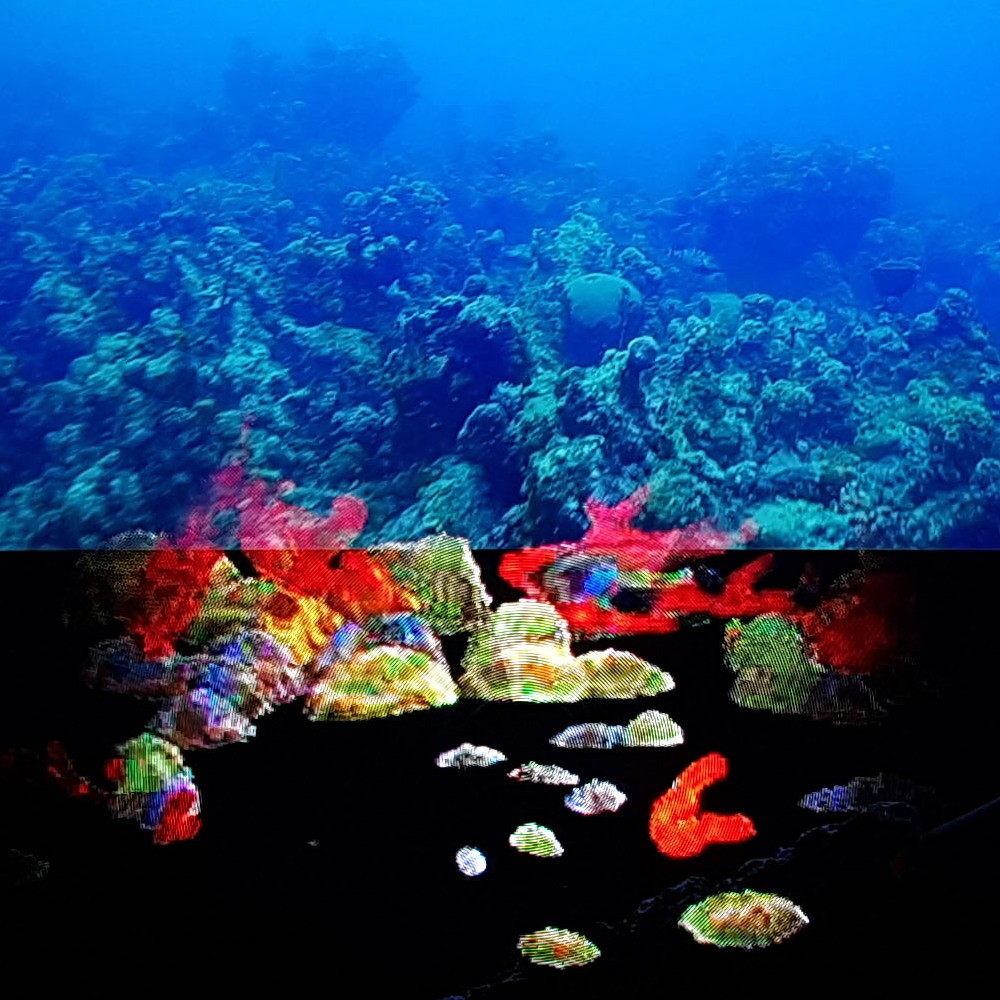
This talk presents my recent research and creative practice at the intersection of artificial intelligence, biocultural heritage, and indigenous storytelling, grounded in my ongoing work in Borneo. It draws on Aquaterrestrial Recolonization: Mission Borneo, which explores speculative, ecological, and data-driven approaches to reimagining cultural and environmental futures through interactive media. Building on this project, I discuss my emerging direction that brings together biocultural heritage preservation, indigenous knowledge systems, and community-based storytelling, positioning AI not as a tool of extraction or classification, but as a co-creative mediator within living cultural ecologies. The talk proposes a hybrid artistic and curatorial format in which environmental data, oral histories, and indigenous narratives converge into immersive, interactive systems. These systems preserve heritage as a living, evolving process rather than a static archive.
Resonant Wounds: Shifting Alternative Spaces through Technology in ‘The Southern Dragon’ Theater Performance

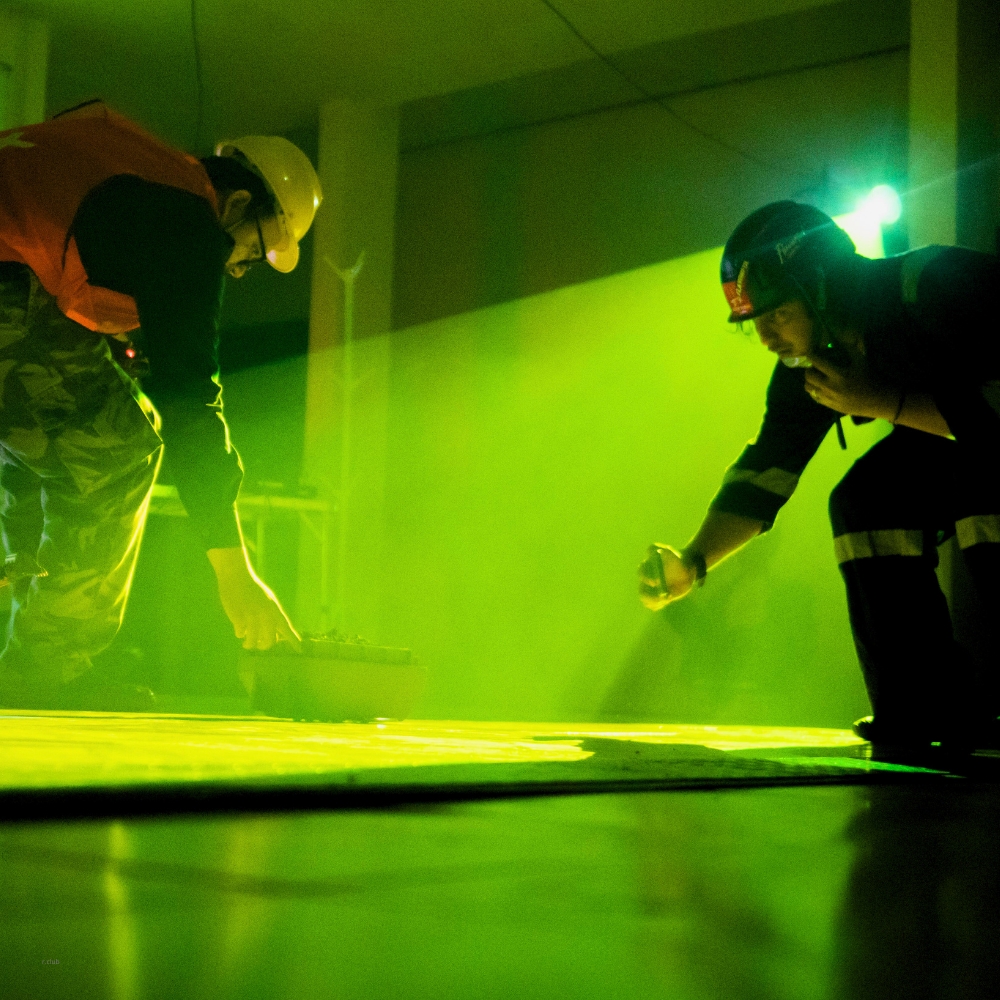
This work responds to the “bodily wounds” of Indonesia’s Batanghari River, a historic Southeast Asian trade route and Buddhist center now facing ecological decay. The performance employs generative and interactive visuals, integrating motion sensors and audio-reactive programming to foster spectator participation. It incorporates interactive barcodes, live-cams with local artifacts , and live techno-phony as sonic instrument performances, alongside electronic devices like televisions, walkie-talkies, and mini water turbines. The artistic approach bridges local narratives, ecological trauma, and river biodiversity with the river’s upstream morphology. By applying technological artistry, the work manifests the “artificial” as an essential alternative space within the theater. Consequently, technology transcends mere illumination, functioning as a temporal bridge between reality and non-reality. This innovation redefines theater by exploring functional and temporal dimensions.
Creating a New Public: Interactive Art in the Age of Decentralization

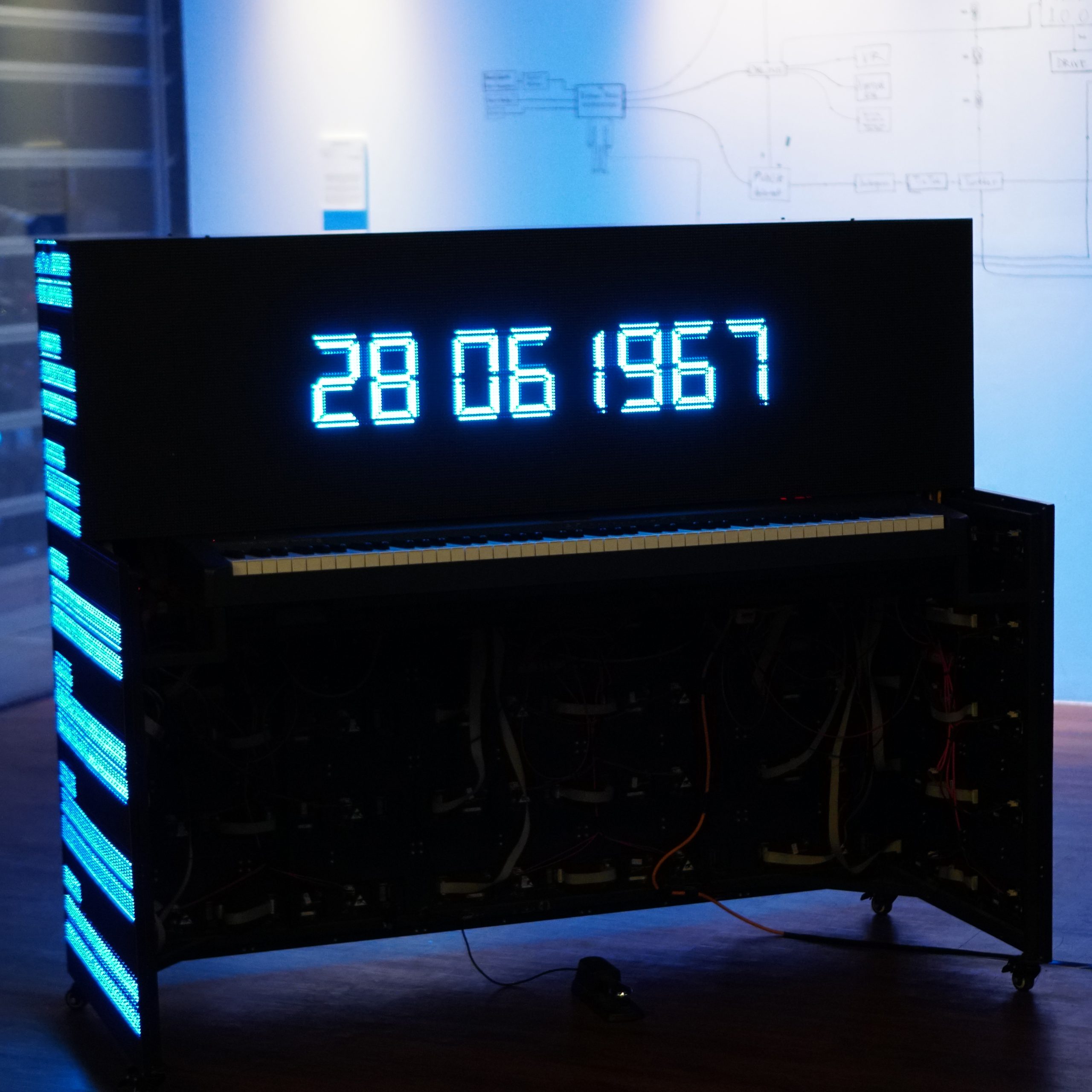
This talk explores PILED 1.0.0.1, an interactive piano installation that bridges physical performance, generative visuals, and the NFT ecosystem. Born from a longing for festivals during the pandemic, PILED 1.0.0.1 reimagines how audiences engage with music and visual art in a post-digital era. Each piano key triggers LED-based generative visuals while simultaneously producing audio-visual content that can be minted as NFTs, creating a continuous feedback loop between live audiences and the “new public” in decentralized spaces. By combining sound, light, code, and blockchain technology, the project questions traditional ideas of performance, ownership, and participation. The talk will discuss the creative concept, technical process, and cultural implications behind building hybrid art experiences that connect real-world interaction with digital communities.
Futile Devices: New Notes on DIY and Practices on the Ground



XVM: Personalized Interfaces and Post-AI Music Practice


Xhabarabot Voice Machines (XVM) is a series of web-based interfaces I’ve been developing as a practice-based research project investigating post-AI music culture. Initially conceived as a personal exploration of my own voice data, the project has evolved into an interactive platform for live, sample-based music production featuring 30+ machines.
Designed to be accessible for non-professionals, the machines (which range from sequencers to ones that respond to audio or visual inputs) deliberately reject conventional digital instrument logics in favor of improvisational, intuitive, and non-linear interaction.
Based on voice samples (or user’s custom samples), XVM treats samples as personalized digital instruments rather than neutral assets, foregrounding questions of authorship, ownership, and responsibility in digital music practices. This project attempts to recenter human agency in music-making processes amidst an increasingly automated and AI-centric music production landscape.
The Vina Manifesto 2.0

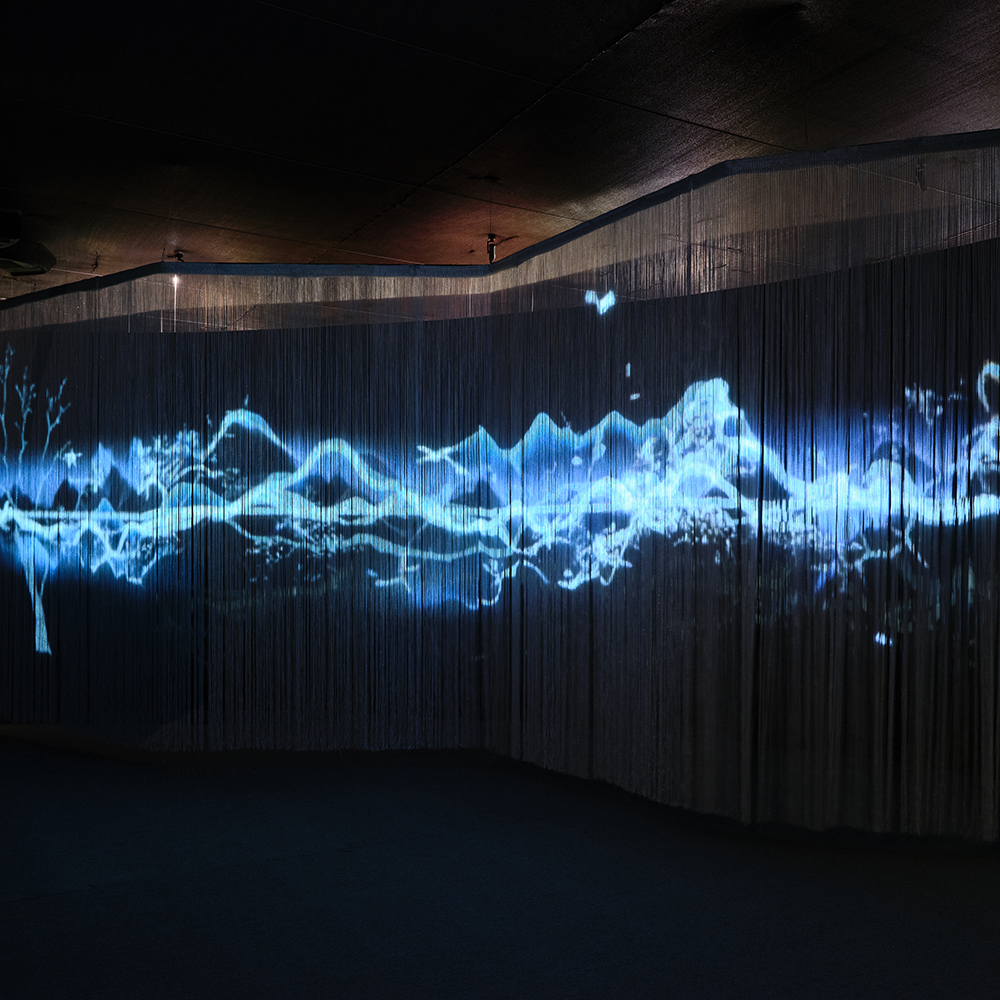
This presentation examines how the “Vina” prefix—historically attached to Vietnamese exports during the Đổi Mới era—has shaped Le Bac Tan’s creative practice within Southeast Asia’s evolving visual culture. Rather than treating Vina simply as a label, the talk positions it as a situated cultural force that animates Le’s work across digital media projects, generating hybrid aesthetic forms rooted in local histories and vernacular sensibilities.
Le’s practice probes the interplay between kitsch, dark humor, and traditional Vietnamese visual vocabularies, not as nostalgia, but as inventive strategies of articulation that contest dominant global narratives of design and innovation. By foregrounding these elements, his work contributes to the region’s plural and generative approaches to media, expanding how interactive and generative art can reflect alternative cultural lineages and resourceful experimentations.
What If Game Boards Could Be Synthesizers? Exploring Congklak as Musical Interface

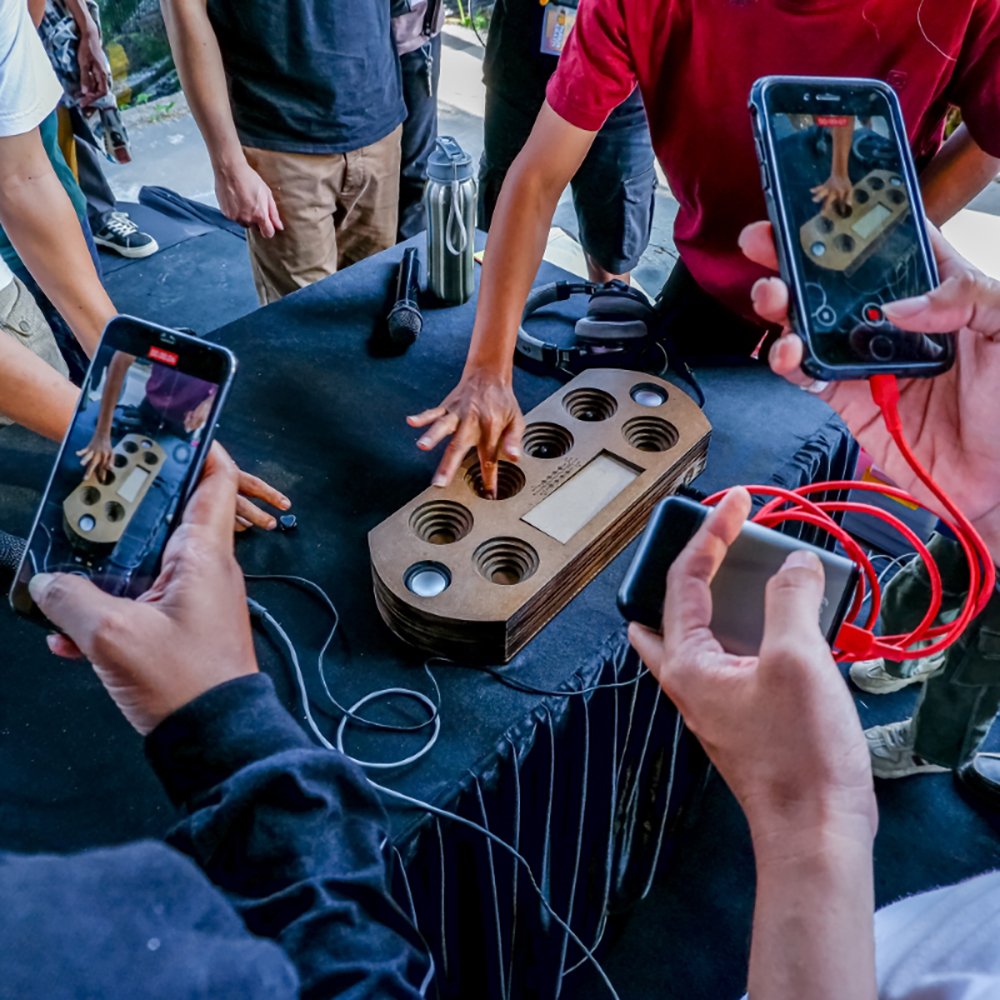
What if traditional game boards could become synthesizers? “Congkak Bunyinya” is an early-stage prototype exploring this question—reimagining congklak, an Indonesian seed-counting game, as a step sequencer. Developed by Bauhouse Consorxium, a small artist collective from Yogyakarta, the project investigates how centuries-old game mechanics might offer new paradigms for musical interaction. The current prototype uses magnets as both seeds and sensors, detecting placement to trigger sounds via microcontroller. Still rough, still evolving. Moving forward, we want to integrate more of the original game’s playfulness: the rhythmic hand movements, strategic thinking, and social interaction between players. The project won the Grand Prize at Rakitswara 2024 (Festival Kesenian Yogyakarta). This talk shares our process and invites conversation about traditional games as untapped interfaces for electronic music—a design space largely unexplored, especially from the Global South.

Patrick Hartono is an Indonesian-born new media artist and researcher based in Ho Chi Minh City. His practice explores interactive systems, machine perception, and computational aesthetics, with a focus on Southeast Asian contexts. He lectures in Digital Media at RMIT University Vietnam and collaborates across disciplines to bridge art, technology, and cultural research.

Bin Youn is a Korean multimedia artist, educator, and researcher at Digital Media, RMIT University Vietnam. Her AR and XR installation practice spans displacement, East Asian cosmology, and speculative ecology. She investigates how interactive and screen-based practice can mediate relational awareness across bodies, cultural knowledge, and environment, approaching digital media as a relational medium and drawing on Eastern knowledge systems as structural paradigms. Her work often emerges from collective processes: workshops, fieldwork, and cross-cultural collaboration. She has exhibited work across Southeast Asia, East Asia, and the US, and co-moderated the “Beyond the Global North” session at ACM SIGGRAPH DAC SPARKS.
Working primarily with photography, spatial video installation, light, and sculptural forms, Youn creates sensory-based moving image installations that invite viewers to navigate spacetime. Her installations explore the invisible interactions between light-forms and space-colors through bodily experience while addressing the ruptures of cultural disparities. She is dedicated to weaving cultural and material narratives into transformative spatial encounters, where the boundaries between self, space, and time are continually reimagined.