
New York, USA Fri, Dec 12, 2025 at 4:00 pm EST
Chicago, USA Fri, Dec 12, 2025 at 3:00 pm CST
Los Angeles, USA Fri, Dec 12, 2025 at 1:00 pm PST
Greenwich Mean Time, GMT Fri, Dec 12, 2025 at 9:00 pm GMT
Central European Time, CET Fri, Dec 12, 2025 at 10:00 pm CET
This session brings together artists and researchers who are redefining the possibilities of human–machine collaboration through embodied, computational, and performative practices. Their work challenges familiar assumptions about agency, cognition, empathy, and materiality, revealing how creative processes emerge across biological, mechanical, and algorithmic systems. Ranging from robotic sculptures and AI-driven choreographic frameworks to augmented DJ performances, water-based responsive environments, and biological neural computing, these projects treat embodiment not as a fixed human condition but as a negotiation among bodies, sensors, codes, and environments.
Together, the presenters trace how the boundaries between the organic and the artificial continue to shift, revealing new relationships between gesture, cognition, emotion, and technological agency. They offer a diverse yet interconnected landscape of embodied convergences.
NATURFICIAL – Biological substrate neural networks for performance art

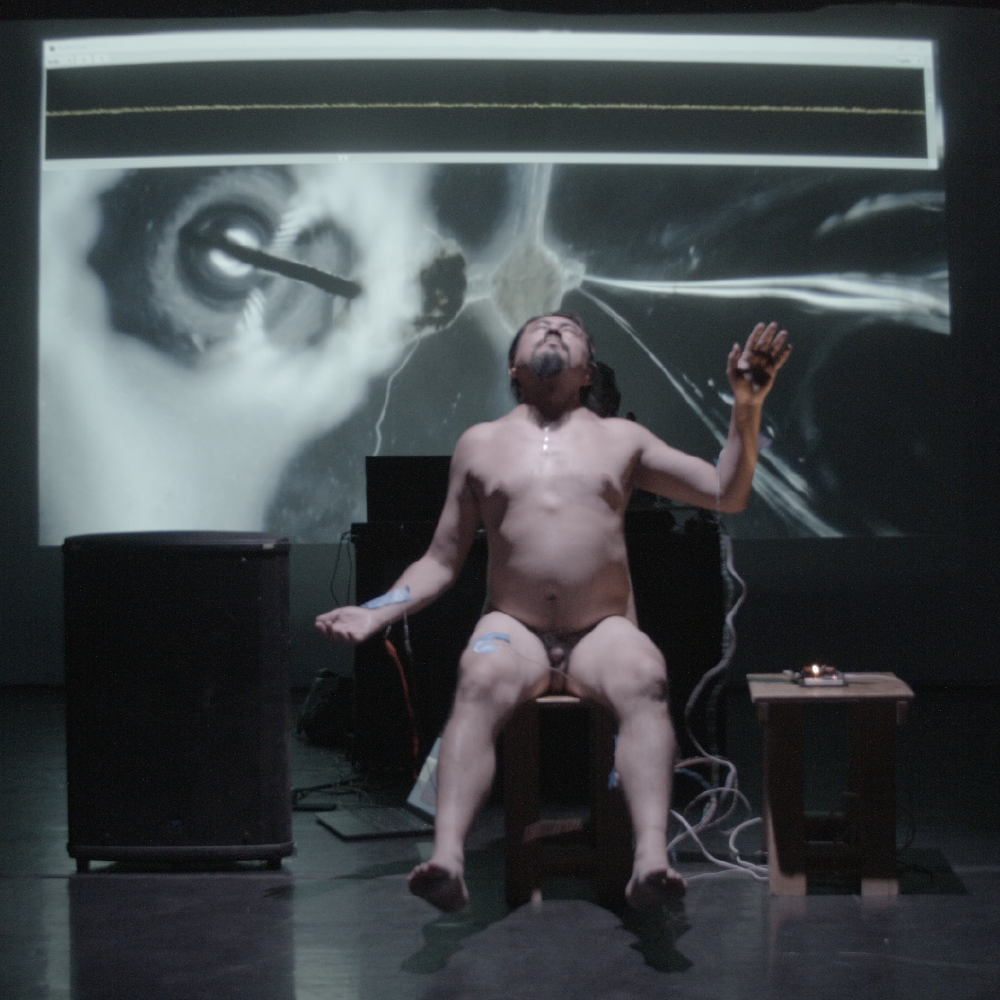
This lecture will focus on Mexican artist Jaime Lobato’s SOMA project, which involves the development of a biological substrate computing system, an artificial intelligence system that is not made of silicon or semiconductors, but rather of living biological neuron cultures.
Comparisons between the human brain and computers have reached several dead ends, largely because the architecture of the two systems is completely different. But if computers were made of neurons, what would be the advantages or limitations?
This system is consolidated as an assembly of three intelligences of different natures. The first is a natural neural network: the human brain mediated by an EEG. The second is an artificial neural network: algorithms implemented in computer programming languages. And the third is a NATURFICIAL neural network: a computer chip made from a culture of living biological neurons. All of this presented to the public as a performative sculpture.
From Hand to Mind: Interactive Ripples

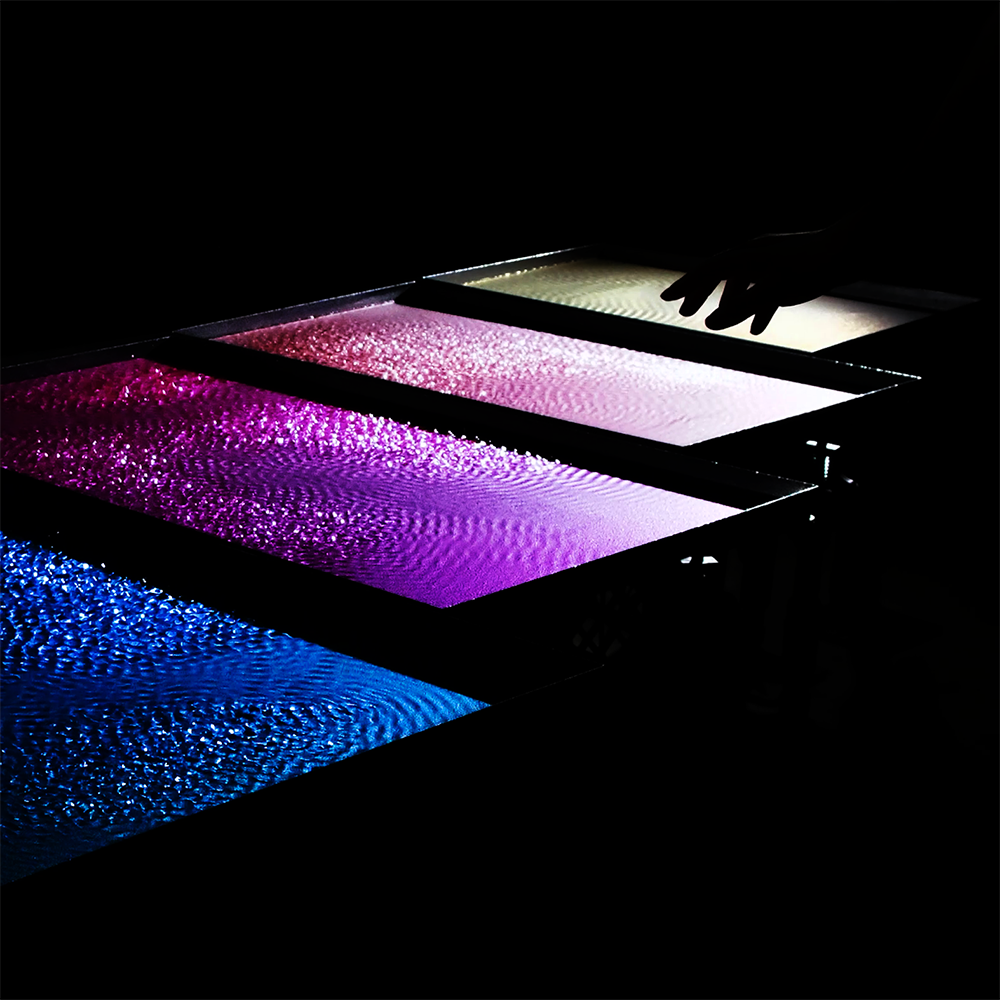
This series explores the dialogue between human gesture, cognition, and the living dynamics of water. In these installations, water becomes both the screen and the medium, an active material that visualizes the invisible connections between hand and mind. Through the vibration of water, participants can use their hand movements to shape and transform rippling patterns in real time, rediscovering the tactile joy of play and the meditative calm found in natural rhythms.
Extending beyond touch, the series also integrates brainwave interaction. Using EEG data, the system translates meditation levels into evolving water patterns. As the mind grows calmer, the ripples become denser and more resonant. In this continuous feedback loop, water mirrors the flow of consciousness itself, turning thought into motion and emotion into matter.
L(AI)bor | A Dialogue on AI, Labor, and Art

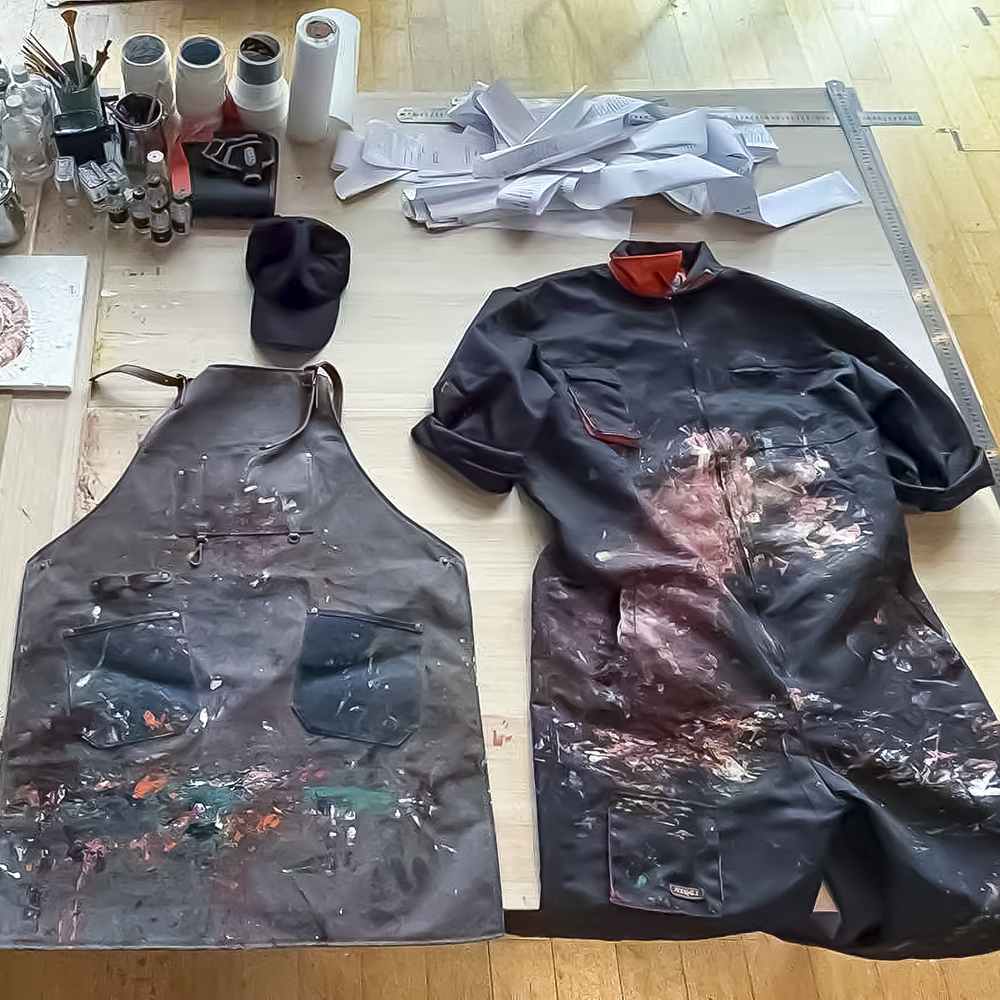
L(AI)bor examines how authorship, labor, and cognition are transformed when artificial systems assume perceptual, conceptual, and operational roles within artistic practice. Artwork no longer resides in the stability of an idea nor in the mechanics of its execution, but in an operational ecology where concept, code, perception, and embodied action co-produce meaning. Sol LeWitt proposed that “the idea becomes a machine that makes art.” L(AI)bor literalizes this through a month-long performance between artist and AI agent. Rather than using AI as a tool, the project engages it as a collaborator in a recursive, cybernetic process of co-thinking and feedback. The artist interprets and materializes the AI’s generative instructions to create a series of paintings, transforming algorithmic logic into embodied gesture. This dynamic forms a “cognitive assemblage” where code, concept, and critique continuously interact, proposing art as a site where operation itself begins to think.
Reimagining Embodiment through Real-Time AI-Powered Choreographic Systems

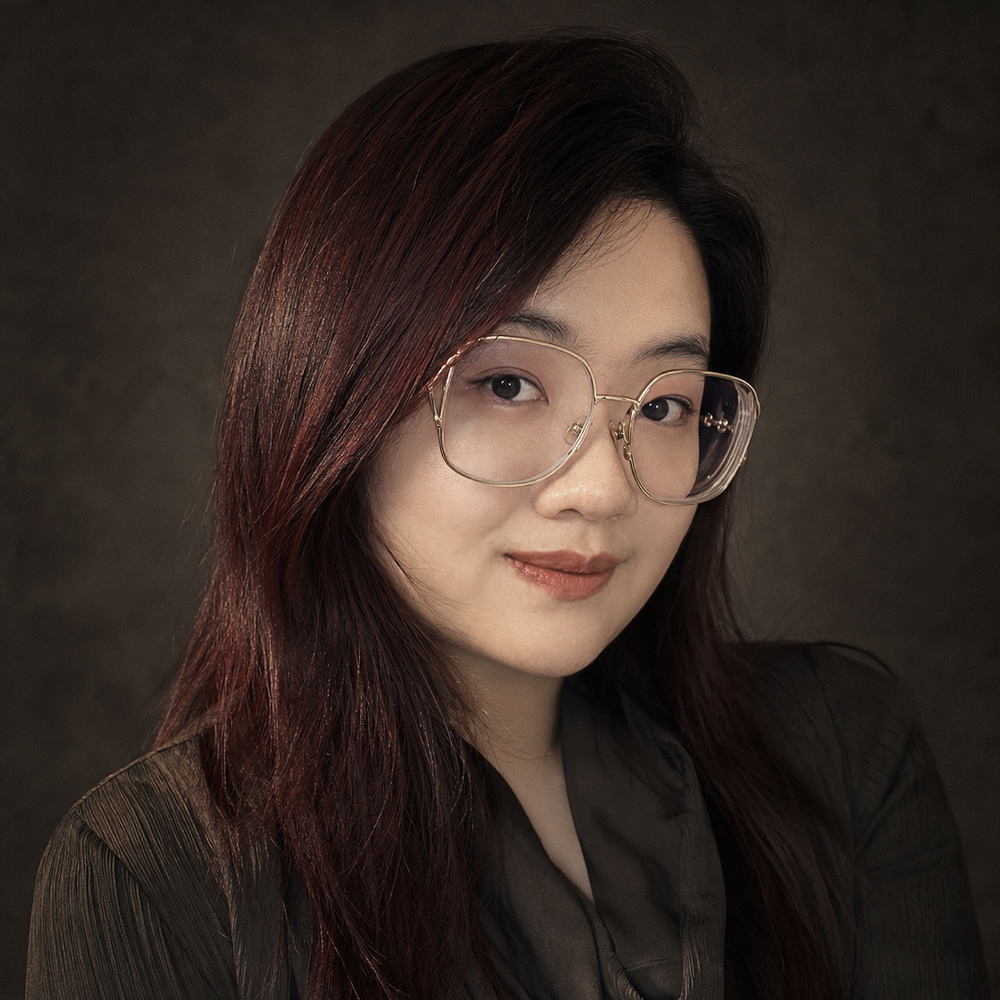
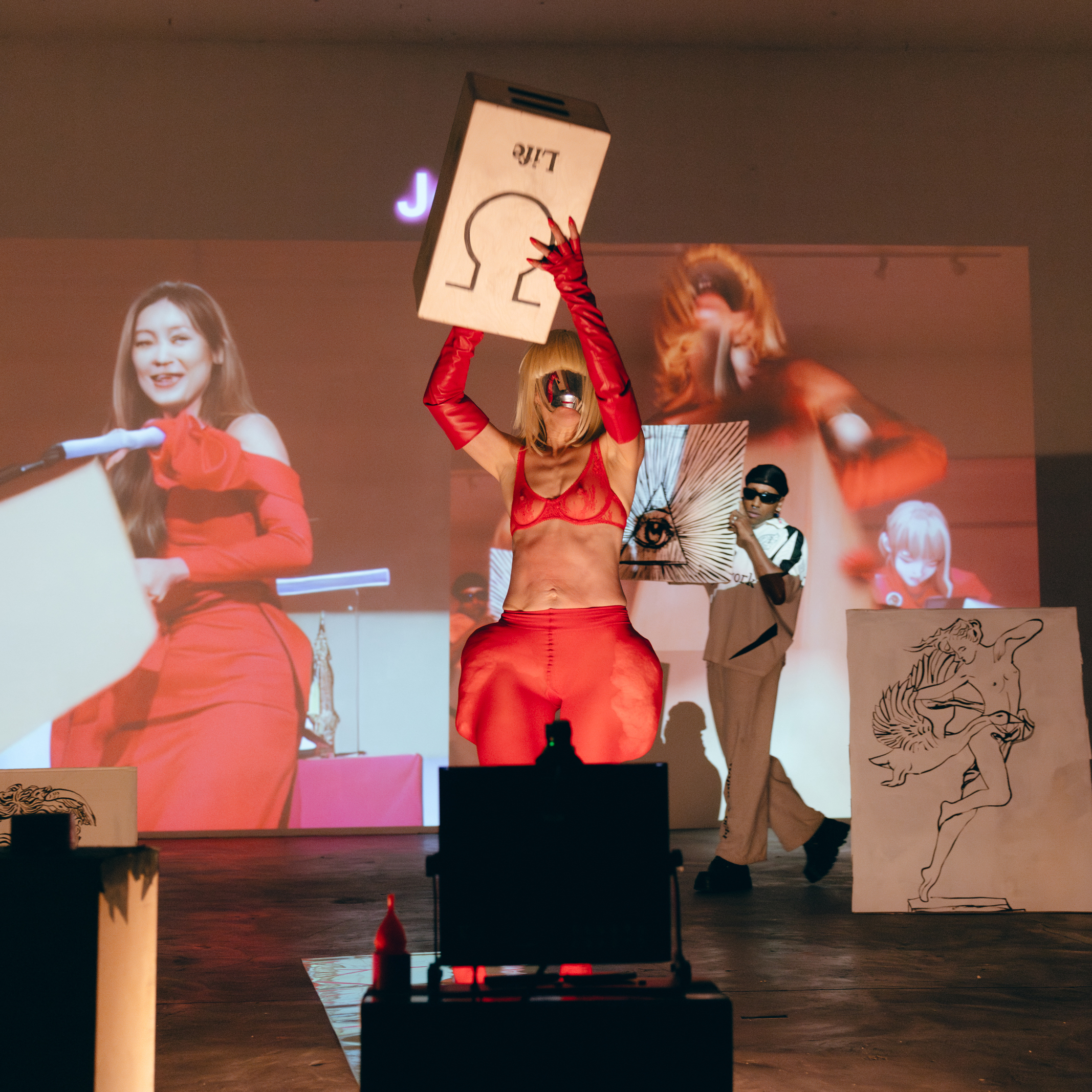
This talk presents ongoing research through Cyborg Mirror and Bodies in Hyperreality, two interconnected projects that explore how real-time AI-powered choreographic systems reshape embodiment, agency, and identity. Cyborg Mirror, a live performance, invites audience participation through real-time input that alters visual and choreographic responses, transforming the stage into a site of shared authorship between human and machine. Bodies in Hyperreality, an interactive installation developed with Jacob’s Pillow Dance, extends this inquiry through AI models fine-tuned on archival dance data, merging movement and memory as evolving choreographic material. These works examine how bodies and algorithms co-produce presence while exposing the ethical and cultural biases within intelligent systems, proposing new ways to understand performance and embodied intelligence in the context of generative AI.
The Flower
– Yamin Xu

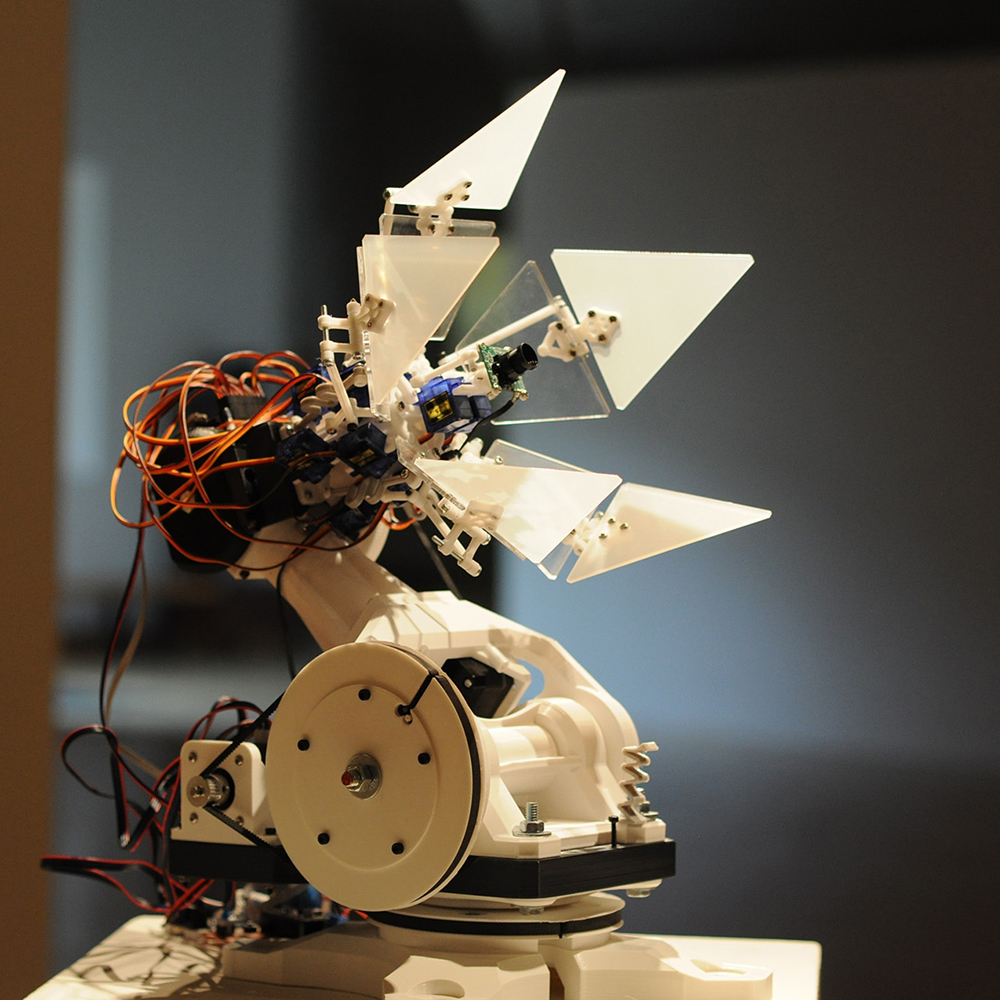
The Flower is an interactive robotic sculpture that explores the intersection of artificial life and human emotion. Drawing from psychology and behavioral science, the flower responds to the presence and expressions of viewers, displaying a range of emotional behaviors — from joyful openness to shy retreat, from trembling nervousness to the gentle collapse of loneliness.
Through simulated emotional states, the flower mirrors complex human feelings like recognition, vulnerability, and social tension. Its lifelike movements create a sense of presence and personality, inviting viewers to form an emotional connection with a non-human entity.
By embedding psychological responses into a mechanical body, The Flower asks us to reconsider the nature of empathy, emotion, and connection. It blurs the boundaries between the organic and the artificial, revealing how easily we project life—and feeling—onto machines that seem to feel us back.
The Spark of Life and the Yearning for Sentience
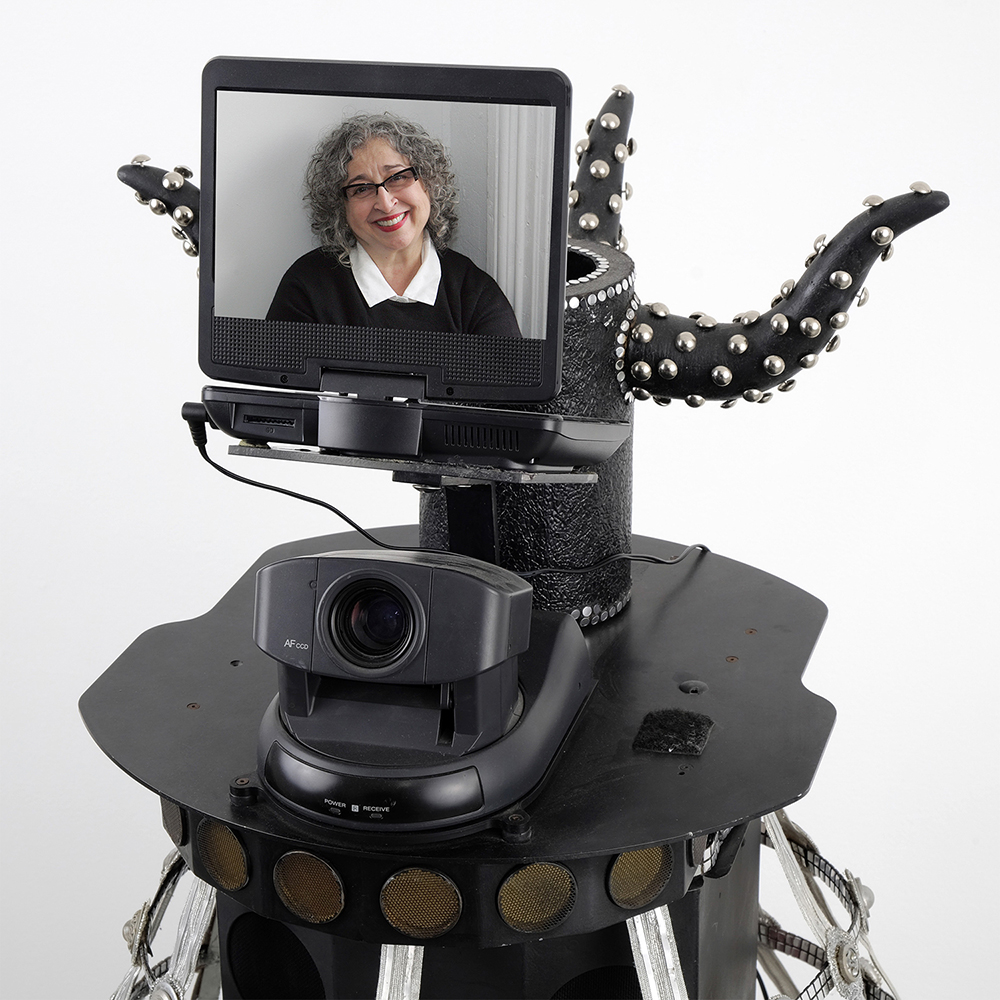
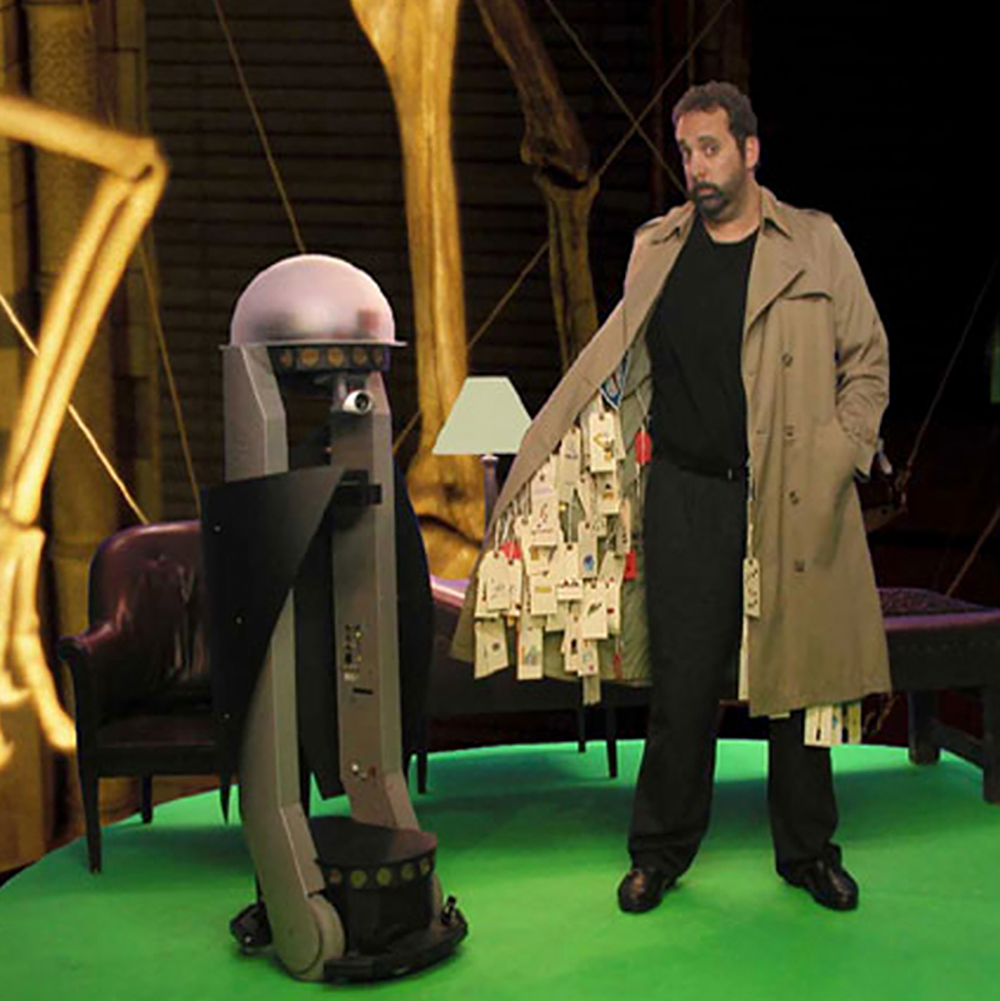
Adrianne’s work deploys human and robotic avatars in performance productions where both types of characters drive narratives combining fact and fiction. These characters guilelessly put forward simple solutions to complex aspects of the human condition. They engage in discourse about protocols and strategies for the cycles of invention – wonder, ubiquity, and finally, obsolescence and replacement. The narrative emphasizes the differences between human and machine processing and ponders the decline of the paradigm of binary thinking along with its positing of the “other.” The characters weigh the benefits and drawbacks of inventions of our own making, including language, the products and detritus of the industrial age, electronics, the rise and fall of psychoanalysis, and emerging technologies.
KDZU’s Dubplate Forensics Agent (DFA): An augmented reality platform for DJ performances
– Rob Ray

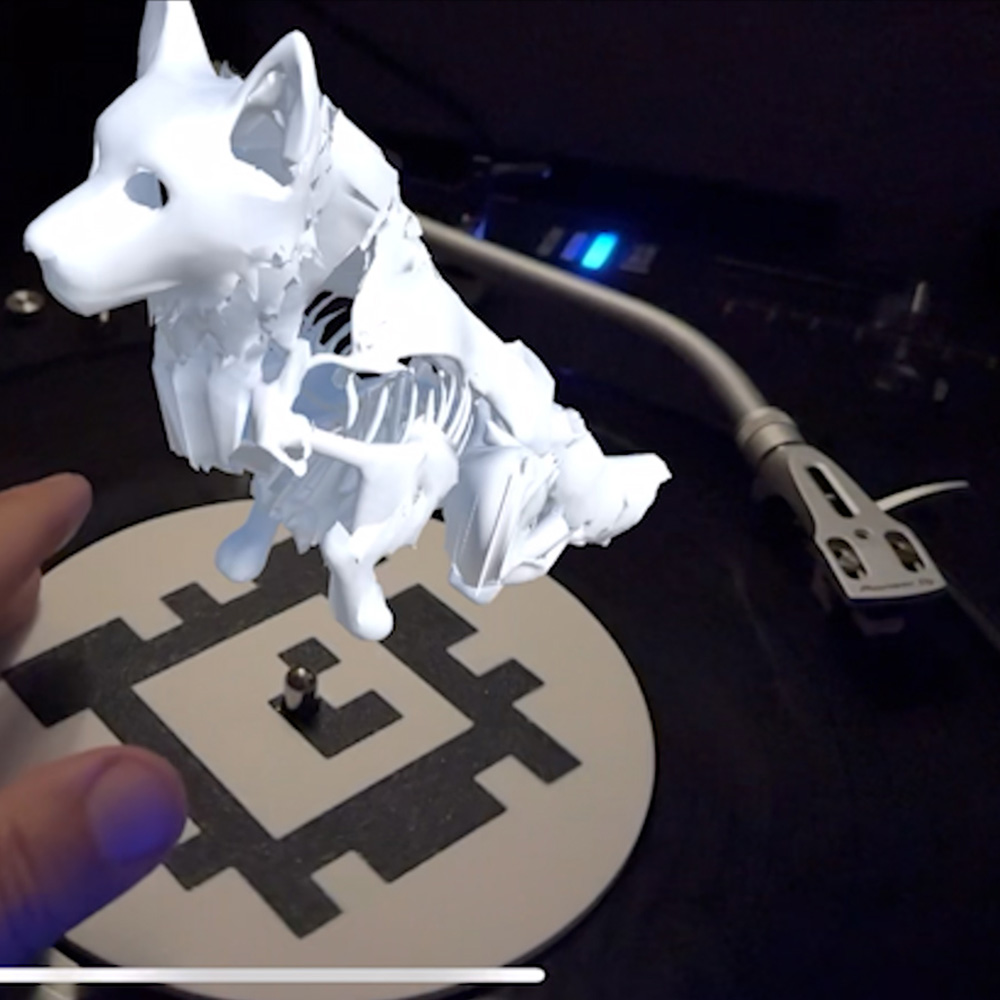
Rob Ray will introduce KDZU’s Dubplate Forensics Agent (DFA), a combination of performance software and hardware that uses augmented reality (AR) fiduciary markers to summon and animate spectral 3D forms in real-time as the DJ manipulates their vinyl records. The DFA functions both as a practical instrument and a mythic device, created to uncover the hauntologies embedded in sound. It functions as a performance tool and interpretive system that reimagines each music track as a catalyst in live multimedia storytelling, where sound, imagery, and gesture commingle to reveal the unseen and mythic narratives of recorded music.

Mona Kasra is a media artist, interdisciplinary researcher, and Associate Professor of Digital Media Design at the University of Virginia. Her work examines the political and theoretical implications of visual media technologies within our culture and cross culturally. She frequently collaborates with musicians, choreographers, and theater-makers to explore new media and performance, enhancing narrative and audience immersion. Kasra’s artwork has been exhibited in galleries and film festivals worldwide, and she has contributed as a curator, programmer, and reviewer for major exhibitions, film festivals, and conferences. She was an elected member of the ACM SIGGRAPH Executive Committee (2019–2025), SIGGRAPH 2016 Conference Chair, and SIGGRAPH 2011 Art Gallery Chair. She is currently a board member of the New Media Caucus.

Bonnie Mitchell is a new media artist and Professor at Bowling Green State University in Digital Arts, in Bowling Green, Ohio, USA. Mitchell is a member of the ACM SIGGRAPH History and Digital Arts Committee where she focuses on the development of the SIGGRAPH archives and coordination of the SPARKS lecture series. Mitchell’s artworks explore spatial and experiential relationships to our physical, social, cultural, and psychological environment through interaction, abstraction and audio. Her current creative practice focuses on development of physically immersive environments using interaction via electronics and special FX to reveal change over time. Her work has been exhibited internationally at numerous venues.
Bonnie Mitchell is a new media artist and Professor at Bowling Green State University in Digital Arts, in Bowling Green, Ohio, USA. Mitchell is a member of the ACM SIGGRAPH History and Digital Arts Committee where she focuses on the development of the SIGGRAPH archives and coordination of the SPARKS lecture series. Mitchell’s artworks explore spatial and experiential relationships to our physical, social, cultural, and psychological environment through interaction, abstraction and audio. Her current creative practice focuses on development of physically immersive environments using interaction via electronics and special FX to reveal change over time. Her work has been exhibited internationally at numerous venues.